


Backcountry Skiing Checklist.

Backcountry skiing – venturing into unpatrolled areas, either inside or outside of a ski resort – is a coveted pursuit for experienced thrill-seekers looking for the challenge of the unmarked, wild, and free backcountry. But the gear, clothing, and ski trip essentials are critical to a safe and enjoyable experience. Find all the backcountry skiing essentials in this guide.
The Backcountry Awaits. Skiing or Snowboarding?
Whether you’re on a splitboard or a pair of skis, we’ll break down the backcountry essentials. Many of the essentials are the same regardless of whether your feet are planted on a board or a set of skis.

Backcountry Ski Equipment.
Backcountry Skis.
Backcountry skis are lightweight and wider than classic crosscountry skis. This combination maximizes the chances of traveling uphill for longer distances, while still being able to descend easily. Skis that are too heavy will drag us down and limit our momentum, while narrow skis won’t perform well in deep, off-the-path powder snow.
Don’t sleep on the backpack.
Carry all your essentials comfortably on your back using a sleek, practical ski backpack. Moving easily on the mountain is key and a compact backpack allows you to freely ski in terrain while also offering the necessary space for your essentials.
The Snow Pro Backpack is a classic, technical ripstop backpack that integrates well with the rest of your ski gear. Available in two sizes, 25L and 32L, you can choose the version that fits your needs the best.
Poles.
Skis are nothing without poles. And definitely something you’re dependent on when going uphill in the backcountry terrain. Your ski poles must be set to a length that corresponds to your height, but luckily many suppliers on the market offer adjustable poles. That way you can make them longer for when traveling uphill and shorter when descending.
Backcountry Snowboards.
Many riders prefer a splitboard, which is a type of modifiable snowboard that splits in half. When it separates down the middle, it functions as a pair of skis. This allows you to modify your journey to the terrain and use the skis uphill and the board for cruising downhill.
Bring your gear in a snowboard backpack.
Overpacker or just well prepared? Use a snowboard backpack to gather and organize all your snowboarding gear for when you’re hitting the mountain. Go for a model that fits your needs, whether that is extra space or smart features.
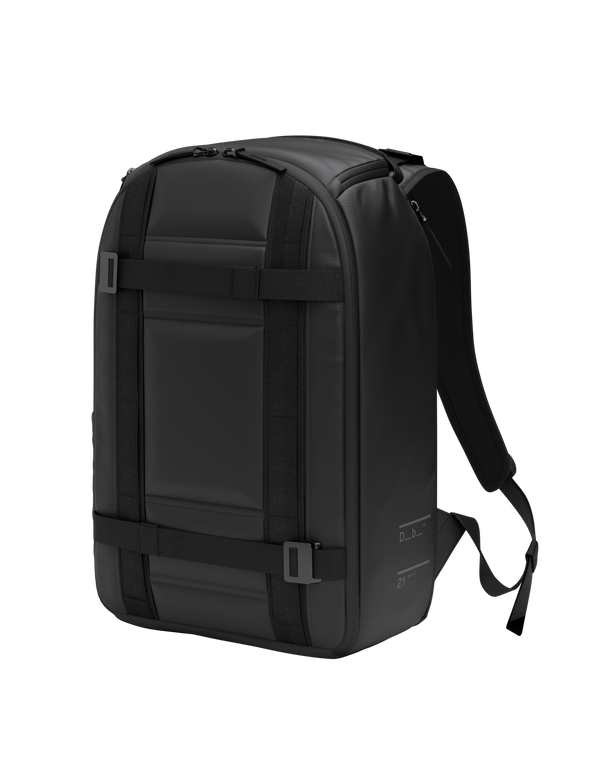
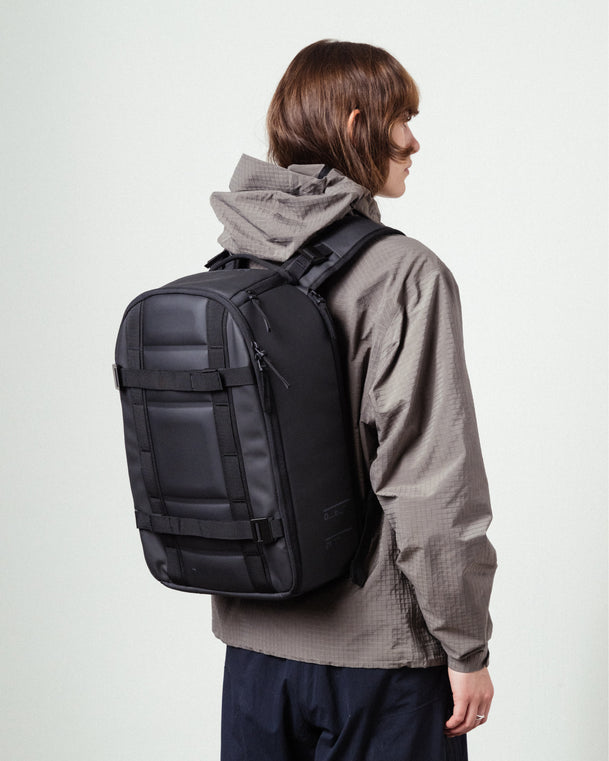
The Backcountry Backpack is the snowboard backpack for off-piste journeys and life off the mountain. The slim-fit design makes it lift-friendly and easy to handle on the slopes and the designated internal avalanche compartment secures the safety of your journeys.

Boots.
Backcountry skiing boots differ from alpine skiing boots in that they are walkable, meaning that they both have a ski mode and a walk mode, given the flexibility to travel uphill much more comfortably. Many backcountry snowboarders, however, use the same type of snowboarding boots that they use for regular snowboarding.
Goggles, helmet, and accessories.
You need to protect your head, eyes, hands, and basically your entire body when you’re exposed to the brutal (but beautiful) backcountry. The temperature will definitely drop throughout the day, the wind will turn or pick up, and terrain is unpredictable. Whether you’re skiing or snowboarding, remember your helmet, goggles, and accessories like gloves, balaclava, and extra wool socks.
Pack and travel with a helmet bag.
A good tip to keep organized on your way to your backcountry adventure is to pack in a ski helmet and boot bag. This a bag specially designed to fit your helmet, boots, and accessories in an organized and safe way.

Climbing skins.
Climbing skins are pieces of carpet that you attach to the bottom of your skis or splitboard to give you a better grip of the terrain when moving uphill. When you reach the top, they are easy to slide off and slip into your backpack before you’re ready to descend.
Avalanche gear.
When cruising down the mountain or in the backcountry, you should never underestimate the danger of an avalanche. That’s why it’s essential to always be equipped with some professional avalanche gear like an avalanche vest when you’re freeriding or touring. If you get buried in an avalanche, your chances of survival decrease within just a few minutes. With the right avalanche gear, you can take quick, lifesaving actions in dangerous situations.
Remember the safety vest.
Our Snow Pro Vest is designed with one purpose in mind: to have your back in case of an emergency, without being a hindrance while riding or jumping off the lift. Created in collaboration with Sage Kotsenburg, the Snow Pro Vest is equipped with avalanche safety layers tailored for off-piste terrain.
If you’re looking for a more advanced avalanche vest, we recommend The Snow Pro Vest with Safeback. This backcountry saftypack comes equipped with the Safeback SBX system – an innovation that actively supplies clean air for up to 90 minutes to those trapped in an avalanche.

Backcountry Ski Trip Essentials.
When in the backcountry navigation is key. You can’t always rely on your amazing directional sense, sometimes you need some good ol’ fashioned navigation tools. A map and a compass is always good to bring to the backcountry. Nowadays, we use our smartphones for checking out a ski spot or getting directions from A to B, but out in the backcountry you risk losing power or not having reception. That’s why we say “Dust off the map and bring it in your backpack”.
Another thing that you might miss when packing for your trip is to consider the sun. For some, sunshine and the snow-covered backcountry might not go hand-in-hand, but we’re here to tell you they do. That’s why we say bring your sunglasses and your SPF on the trip. If the sun peeks out, the snow reflects it, offering great conditions for a tan – but only if you’ve packed on the sunscreen. You don’t want to look like a red lobster cruising down the powered mountains.
Warm clothing, food and nutritional snacks, a water bottle, and a first aid kit are other givens that you must bring with you in your ski backpack.
Clothing for the Trip.
Start with a wool base layer and build from there. This is key to keeping warm throughout the day. By its natural qualities, wool regulates the temperature of your body, meaning that it keeps the cold at bay at the same time as it cools you down during sweaty or sunshine-packed uphill battles. It also dries fast if you sweat or get wet. We recommend using wool socks, a wool undershirt, wool longjohns, and accessories like a hat and even underwear in wool.
Once you’re all covered up in nature’s finest, you can wrap up in a layer of fleece or more wool. A fleece jacket or a thick wool sweater is great for extra warmth, that you can also take off if you overheat.
Finish off with an insulating outer layer. This can either be a thicker down-filled jacket, or a lighter, but insulating soft shell layers. Depending on the conditions, a lightweight, breathable windbreaker might be sufficient. You can always pack extra layers in your backpack.
Packing Up Your Essentials in a Ski Bag.
It can be a pain in the ass to travel with your snow gear. But it doesn’t have to be with snowboard travel bags. Whether it’s backpacks, roller bags, or duffels, travel bags for ski and snowboarding trips offer maximum comfort throughout your journey.
Bags for the journey.
Our Snow Roller is a long, compressible ski bag meant to streamline the packing and transport of skis and ski poles. It’s a spacious bag with compartments that also facilitate space for extra layers. Additionally, its puncture-proof wheels pave the way for a smooth journey.
The Snow Essential Ski Bag is a more pared-down, but equally functional ski bag for travel. Its straps are easy to adjust and fit comfortably on your shoulders when you’re on the go. It is also available as a snowboard bag.
Backpacks for every step of the journey.
A ski or snowboard backpack isn’t just the perfect companion for when you’re deep in the snow, it’s also great for carry-on luggage for the plane, train, or car journey. Maximize the use of your backpack and pack your on-flight essentials before you re-pack at the hotel and go explore the backcountry.
Read more: How to pack a snowboard bag for air travel

Complete Backcountry Ski Packing Lists.
Backcountry ski equipment checklist:
-
Skis or snowboard
-
Boots
-
Poles (if skis)
-
Goggles
-
Helmet
-
Climbing skins
-
Crampons
-
Ski wax and waxing tools
-
Ski or snowboard backpack
-
Avalanche gear (transceiver, shovel, snow axe, and/or probe)
-
Slope meter
-
Watch
-
Whistle
-
Guidebook
Backcountry ski essentials checklist:
-
Navigation (map, compass, and/or GPS)
-
Sun protection (sunglasses and SPF)
-
Insulated and warm clothing
-
Headlamp and extra batteries
-
First aid kit
-
Repair kit
-
Emergency shelter (tent or tarp)
-
Food and water
Backcountry clothing checklist:
-
Wool base layer
-
Fleece jacket and pants
-
Insulating down jacket
-
Waterproof, breathable jacket and pants
-
Hat or balaclava
-
Bandana or buff
-
Cap (sun protective)
-
Gloves
-
Socks
Personal items:
-
Toilet paper
-
Sanitation towels
-
Hand sanitizer
-
Quick dry towel
Guide to Backcountry Skiing.
Read our guide to backcountry skiing and get an overview of the basic techniques of this ski style. We also offer some suggestions to the best places to ski in unpatrolled terrain. Go explore here.