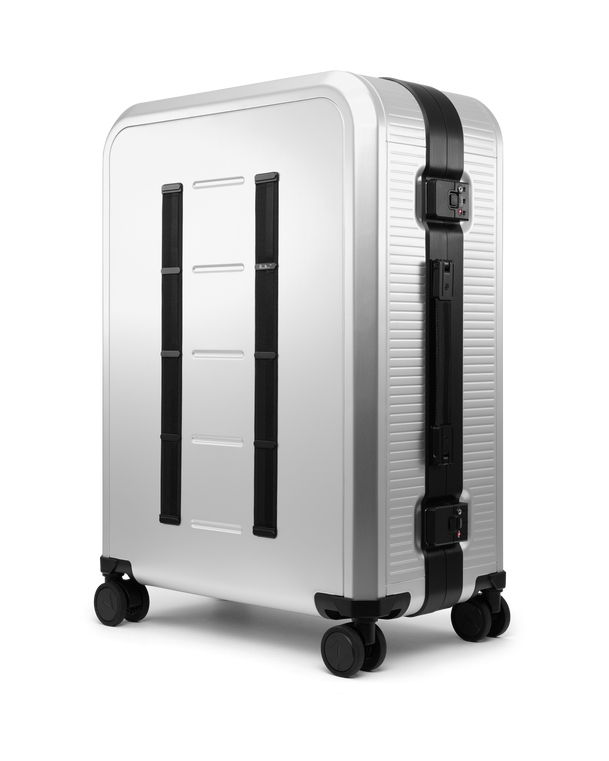
- Bestseller
CHF 229
Items not reserved. Complete your order now to secure your gear!
Your cart is currently empty.
Designed in Scandinavia
There are two main types of small luggage commonly used for air travel: underseat and overhead luggage.
Underseat luggage, typically around 45 cm x 35 cm x 20 cm, is designed to fit under the seat in front of you. This compact size is ideal for personal items and essentials you want to keep close during the flight.
Overhead luggage, usually around 56 cm x 35 cm x 23 cm, is larger and meant to be stowed in the overhead compartment. It's perfect for short to medium-length trips, allowing you to carry more without the need for checked baggage. Both types are designed to comply with most airlines' in-cabin restrictions. Db offers a variety of small overhead luggage above and smaller backpacks and totes to be used as under seat bags.
When picking a small suitcase for your travels, look for one that's tough enough to handle the journey, light enough to carry easily, and has smooth wheels and a comfortable handle for moving around effortlessly. Make sure it has handy pockets and compartments to keep your things organized. Most importantly, check that it fits the airline's size rules for carry-on bags so you won't face any surprises at the airport. Explore all Db:s smaller suitcases by scrolling up.
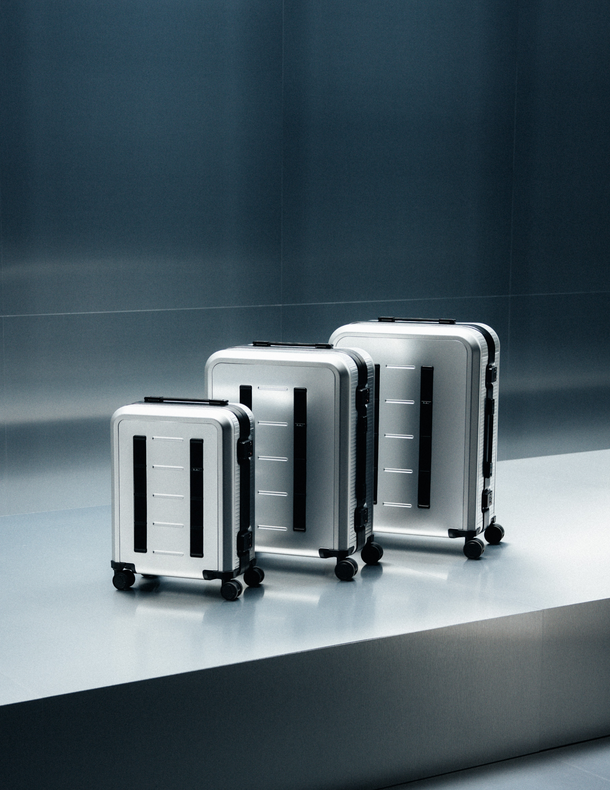
The three standard sizes for suitcases are:
Carry-on: approximately 56 cm x 35 cm x 23 cm. This size is perfect for short trips and fits within most airlines' overhead compartments.
Medium (check-in): approximately 61 cm x 43 cm x 25 cm. Ideal for longer trips or when you need to pack a bit more, this size balances capacity and maneuverability.
Large (check-in): approximately 69 cm x 53 cm x 28 cm. Great for extended travel or when you're packing for multiple people, this size offers the most space but usually needs to be checked in
A small suitcase is typically called a carry-on or cabin luggage. It’s designed to fit in the overhead compartments on most airlines. Db offers five different types of cabin bags. See all small suitcases by scrolling up.
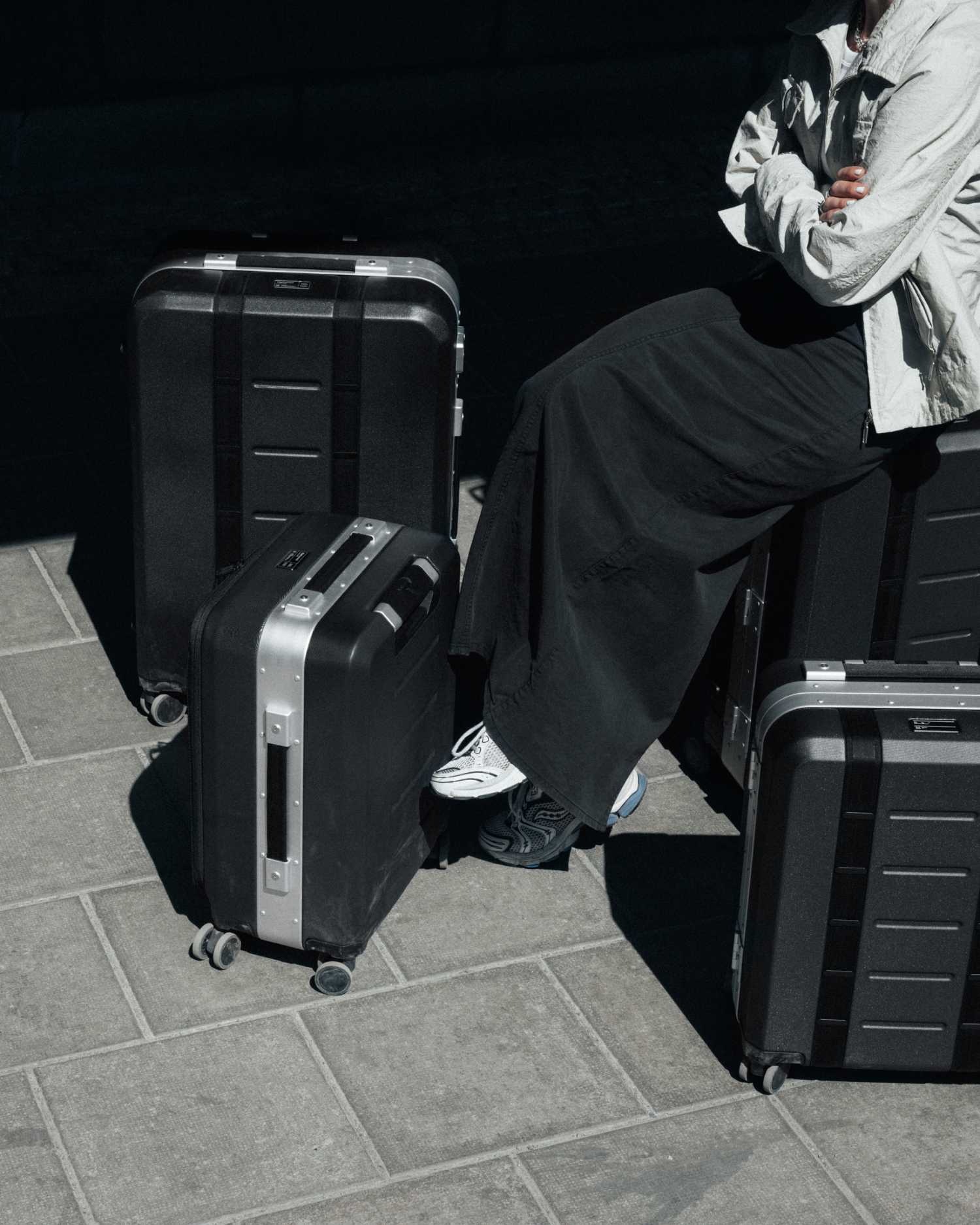
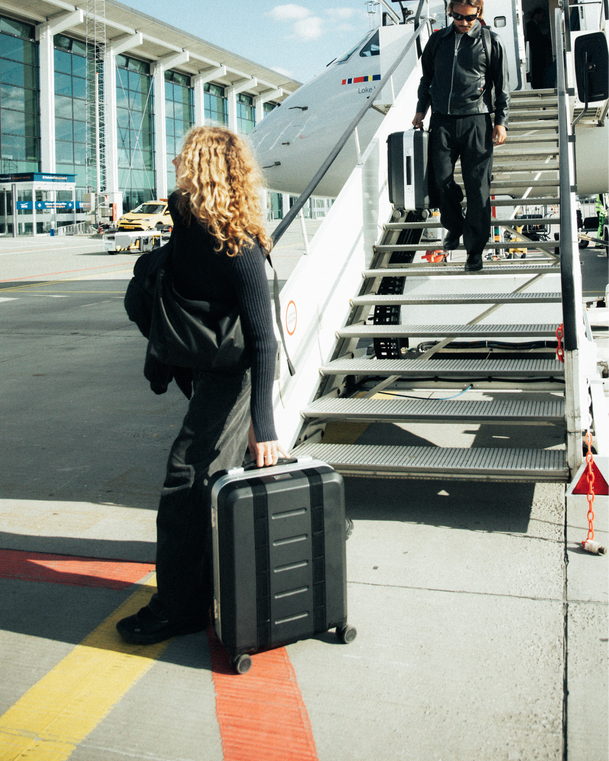
There are two main sizes of small luggage, one engineered to sit perfectly under the seat of the plane, while the other is designed to sit comfortably in the overhead compartment. The former counts as your personal item, while the latter is your carry-on that fits comfortably in the overhead bin.
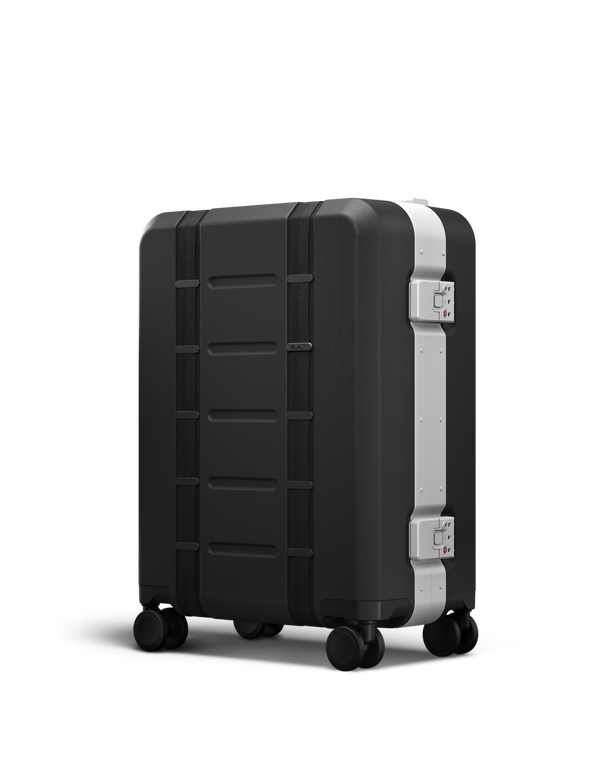
Our overhead luggage is engineered to maximize every inch of the cabin’s compartment. This size is the ideal balance between a lightweight frame and optimized interior volume, giving you enough room for a weekend trip without the need to checka bag. Whether you choose the soft sided, or the hard shell luggage, the check-in bags are built with a sleek profile, ensuring you stay mobile and organized from the terminal to your destination.
Small luggage is generally defined by its ability to stay with you in the cabin rather than being stowed away in the cargo hold.
Pro tip: Check the overview of airline compatibility in the product descriptions for our different types of luggage.
Modern travel demands speed, and our collection of small luggage with wheels are designed to move with you. Our hard case luggage includes a custom made, high-performance spinner wheel system, ensuring effortless 360° navigation through crowded terminals and narrow airplane aisles.
Explore our collection of hard shell luggage.
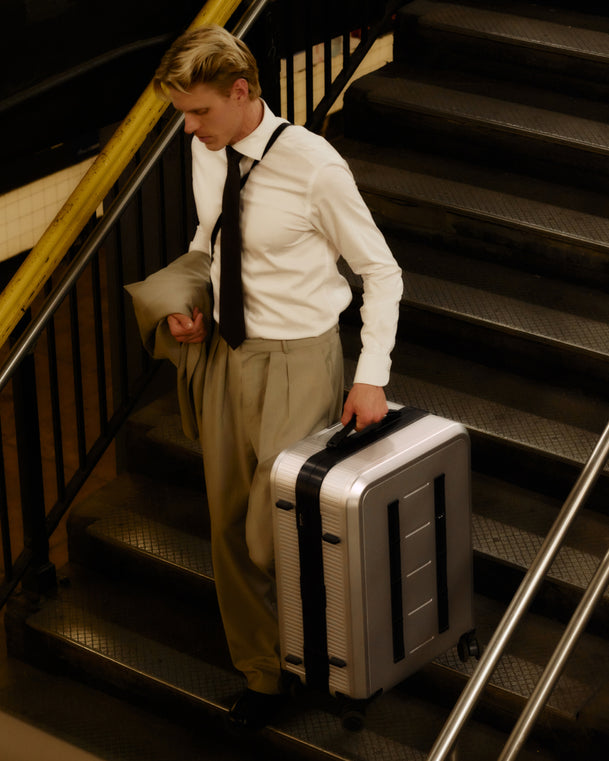
Our small carry-on luggage is engineered to eliminate the friction of traveling. By integrating our patented Rib Cage Construction™, we’ve removed traditional heavy padding, creating luggage that is lightweight yet protective. Whether you’re navigating tight train aisles or sprinting to a gate, the small luggage will follow your speed.
While backpacks offer hands-free mobility, switching to a small luggage bag offers distinct advantages when possible:
For a smooth travel experience, keep your must-haves within arm's reach in a dedicated backpack, while stowing the bulk of your gear in your carry-on luggage in the overhead compartment.
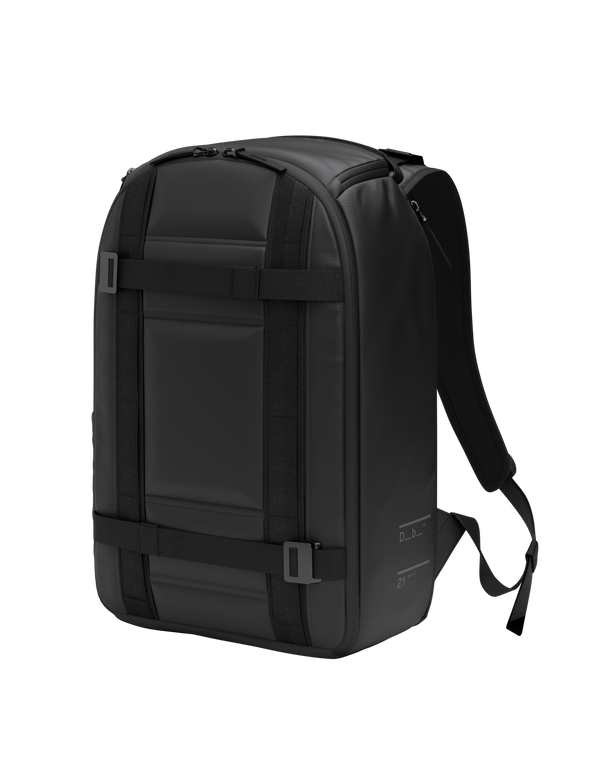
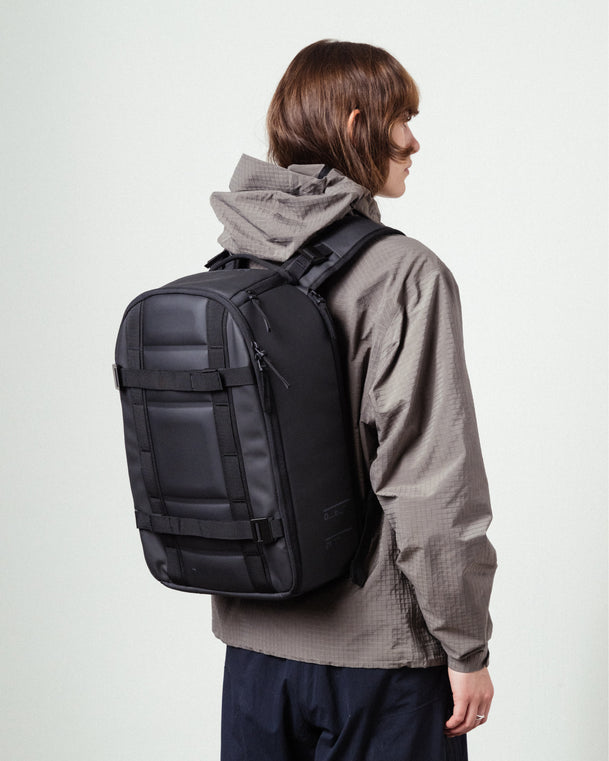
Our collection of backpacks and totes are engineered to function as a mobile office at your feet. Designed to fit perfectly as an underseat personal item, these bags keep your valuable gear in sight throughout the flight. Whether you’re working at 30,000 feet or just want your essentials nearby, stay organized without leaving your seat.
Standard US domestic carry-on dimensions are typically 22 x 14 x 9 inches, including handles and wheels. However, for underseat luggage, the requirements are tighter, usually around 18 x 14 x 8 inches. Always check your specific airline’s personal item and carry-on limits before you head to the airport, or check out our overview of the product to see if your bag is compatible with your airline.
The weight of a small carry-on depends on its construction. Our softside models are engineered for maximum lightness, often weighing between 4 to 6lbs (approx. 2–3 kg) when empty. Our hardside models offer more protection while remaining lightweight, usually starting around 8lbs (approx. 3.9 kg).
Keep an eye on your inbox for more news and Db Black perks, and don’t forget to mark us as a safe sender so we don’t end up in your spam folder.
Join Db Black for member benefits made for frequent travellers.
Sign up now to receive
Your ExpertVoice deal.
$[Deal Price]
$[Original Price]
Discount applied at checkout.
On sale now — lower than your ExpertVoice discount.
Not eligible for ExpertVoice discount.
You’ll see your ExpertVoice discount at checkout.