




How Hard Pack Brought Weigh Lighter™ Monochrome to Life

In Conversation with Zach Seely, founder and editor-in-chief.
At Db, we’re suckers for the real world. Sport. Product. Music. Art. The list goes on. And somewhere in there: printed magazines. Tactile things to hold, flick through, and absorb. A world unto itself, and a reminder of what was.
Hard Pack shares that instinct. While many publications moved from digital to print, Hard Pack went the other way. Its first issue arrived in Winter 2023, and even now, the magazine shares only snippets of its work online, leaving you to seek out the physical copy.
Described as a ‘new type of ski magazine’, Hard Pack offers a fresh perspective on the sport. It brings together reportage, writing, art, and imagery to look beyond the familiar script.
So, what drew us together? At Db, we collaborate and partner with people whose ideas move between sport, design, and culture, including those working well beyond our own world. They offer new perspectives and insights into what goes on outside our scope. Hard Pack felt like a natural fit.
We sat down with Zach Seely, Founder and Editor-in-Chief, to talk about print, perspective and the ideas behind our collaboration.

Db: To start, could you introduce yourself and tell us what you were doing before you started Hard Pack?
ZS: I'm the founder, editor, and publisher of HARD PACK. I'm based in New York, where I've spent much of my career working in fashion, advertising, and brand strategy, primarily as a strategist and researcher. I've also worked as a writer and editor.
Db: Can you trace your relationship with snow sports back to where it began? How has skiing shaped you, both personally and creatively?
ZS: I started skiing when I was three. I grew up in Salt Lake City, Utah, and the first place I ever skied was Alta, in Little Cottonwood Canyon. From where I grew up, I could look toward the mountains and see the canyon where I spent so much of my childhood. Skiing is something I remember doing before I have much memory of anything else.
One of the most important things skiing gave me was confidence. Growing up, and even into adulthood, I could be uncertain about plenty of things, but skiing was always something I knew I could do. It gave me a sense of competence that I could carry into other parts of my life.
The creative side came much later. After moving to New York, I became increasingly immersed in music, film, literature, fashion, and the arts. I was DJing, working in creative industries, and encountering all sorts of ideas with little obvious connection to skiing.
Eventually, those worlds began to overlap. I became interested in what happens when you stop treating sport and culture as separate worlds.
Db: What is Hard Pack, and what perspective did you want it to bring to ski culture?
ZS: Hard Pack is a biannual, print-only ski magazine, although I like to think we're only loosely constrained by that description.
We use skiing and winter sports as a lens to explore a much broader cultural world: architecture, literature, fashion, contemporary art, film, philosophy, and history. We publish serious reportage alongside fiction, poetry, interviews, and photography.
The ambition has always been to create a new lexicon for the sport.
I think skiing can sometimes feel culturally narrow, at least in how it's represented. Certain aesthetics, narratives, and identities dominate the industry. But my experience of skiing has always been much broader than that. It can be strange, intellectual, absurd, and beautiful.
We're interested in opening up those possibilities. What does skiing look like when you consider it alongside the work of an architect, a novelist, or a conceptual artist? What histories have been overlooked? What new stories become possible when you invite people from outside the industry to contribute?
Ultimately, I want Hard Pack to expand what a ski magazine can be, and perhaps what ski culture can be, too.

Db: What made you decide to start the publication? Was there something you felt was missing from the way skiing and its culture were being covered?
ZS: On a personal level, I was creatively stuck. I often tell people I was in a creative existential crisis! I had reached a point in my career where I wanted to make something of my own.
I'd also been looking for a particular kind of ski magazine for years and couldn't find it.
Ski media is very good at telling certain kinds of stories. The athlete climbing a mountain, skiing an extraordinary line, pushing the boundaries of what's possible. Those stories can be incredible, and they certainly have a place. But they represent only a small part of what interests me about the sport.
I wanted a magazine where you might encounter a story about an Olympic skier alongside an essay on modernist architecture, a piece of experimental fiction, or a conversation with an artist.
I wasn't really thinking about it as a business opportunity. I wished it existed.
So I began reaching out to friends and collaborators, many of whom worked in fashion, publishing, art, and design, and we started building it together.
Db: Turning to the Weigh Lighter Monochrome shoot, what was the idea behind the imagery, and how did the story take shape?
ZS: I'd wanted to make a story in Norway for some time, and I kept returning to a scene from Professor Andersen's Night, a novel by the Norwegian writer Dag Solstad.
In the book, a wonderful episode shows two characters setting off together on a cross-country ski trip. They travel to a mountain lodge, have a long philosophical conversation about art, and eventually ski back. Something about that scene has stayed with me.
That became the conceptual starting point for the editorial. Of course, the photographs aren't a literal interpretation of the scene in the novel. Working with Norwegian photographer Boe Marion and stylist Lara De Pretto, the story took on its own atmosphere and character. We put a lot of trust in our creative collaborators. This one in particular.

Db: The shoot brings vintage outdoor gear together with Db's Weigh Lighter collection. What interested you in that contrast, and what did older equipment bring to the story that contemporary outdoor clothing might not?
ZS: One thing we often explore in Hard Pack is the relationship between past and present. We're interested in archival clothing and equipment, but not necessarily out of nostalgia.
I think Boe and Laura deserve a great deal of credit for how they developed that contrast. The other pieces brought texture to the images. They made the story feel less tied to a particular season or fashion moment.
That's something we're often trying to achieve. We try to avoid being on the nose or trend-driven. Ideally, you might encounter our images ten years from now and still find something interesting in them.
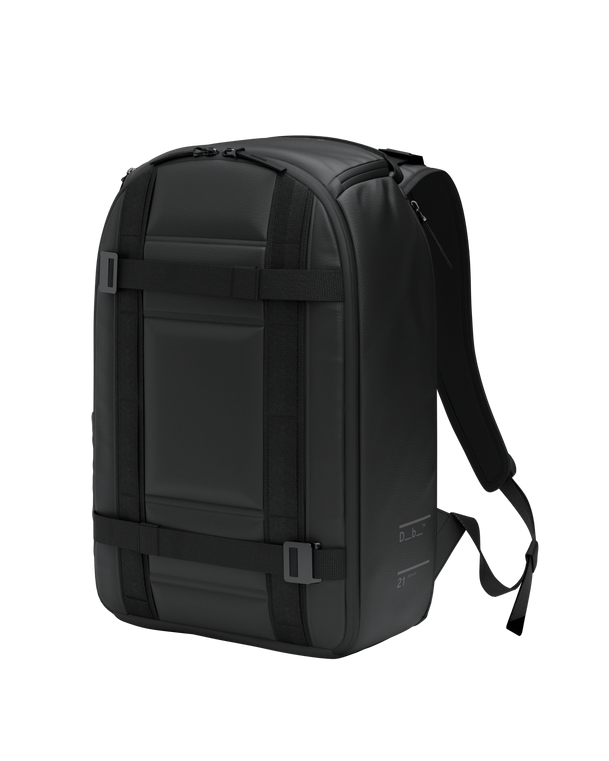
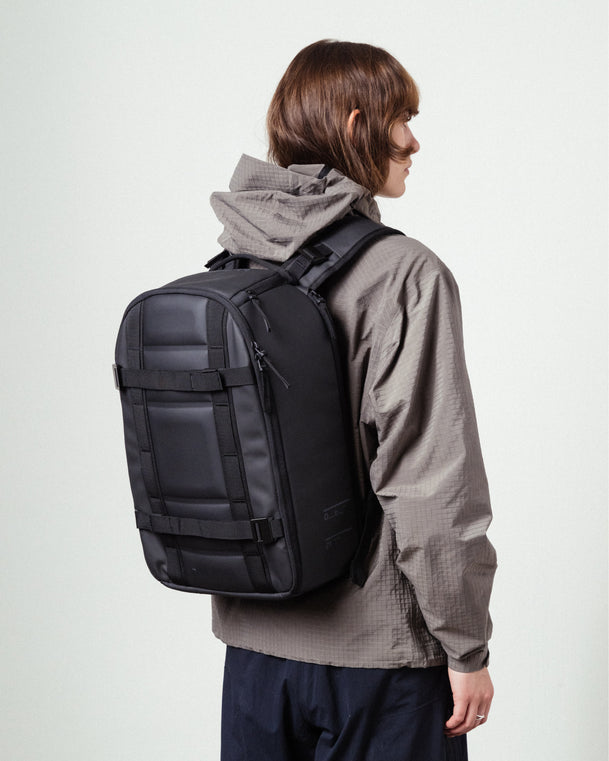
Then I think that helps situate the Db collection in a world you might not have thought they should belong in. The bags are very contemporary and cool, but we saw that they could exist in different worlds too.

Finally, what advice would you give to someone thinking about starting a print publication, or to a young creative hoping to build a career around something they care about?
First, I would say that starting a print magazine is a slightly irrational thing to do. It's expensive, time-consuming, and not an especially attractive business model. You have to be prepared to do an enormous amount of work that has very little to do with the romantic idea of making a magazine.
But I would also encourage people to do it.
There's an incredible community around independent publishing. People are generous with their knowledge, and there are more resources available than you might imagine, whether that's understanding printing, distribution, funding, or finding collaborators.
You don't necessarily need to invent an entirely new idea. Sometimes the most original thing you can do is bring together what you already care about in a way only you would think to.