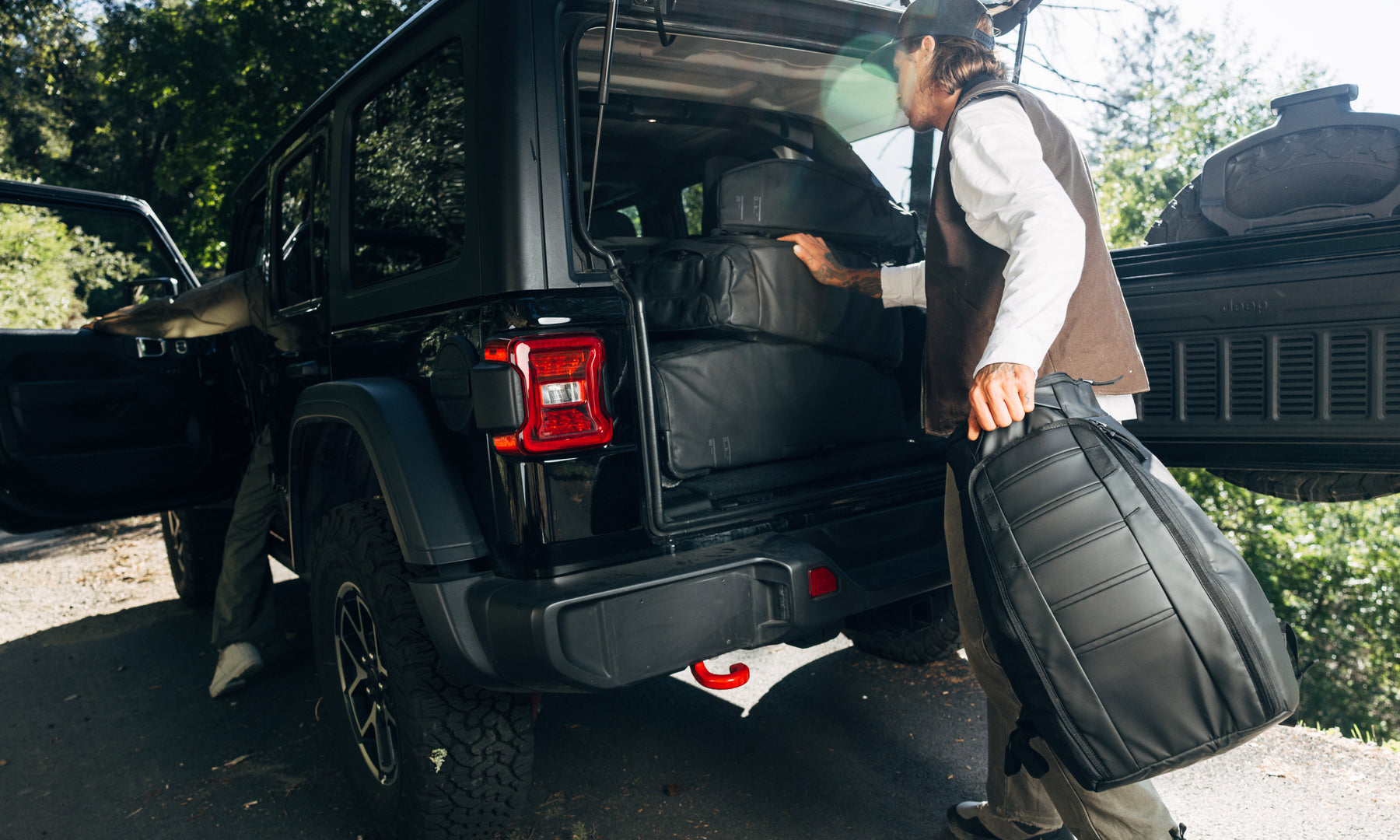
What Do Backpack Sizes Mean?
Unlike suitcases, backpack sizes are measured by capacity, not just dimensions. Capacity is expressed in liters, which tells you how much gear the backpack can realistically hold. Because backpacks are designed to sit close to the body – with curved panels and ergonomic shapes – liters are a more useful comparison than length × width × height. A simple way to visualize it: One liter ≈ one standard water bottle. A 30L backpack holds roughly 30 of them. Not exact – but helpful.
How Big Is a Standard Backpack?
Most standard backpacks are in the size 20–30 liter range. This size offers the ideal balance between capacity and comfort, giving you room for the essentials without feeling bulky or overbuilt.
Typically, a standard backpack fits:
- A laptop (13”–15”, sometimes 16”)
- Daily gear like notebooks, chargers, and a water bottle
- Extra layers or small personal items
Start With Purpose, Not Just Liters.
Before choosing a backpack size, define your journey.
Ask yourself:
- How long am I traveling?
- Will I move frequently or stay based in one place?
- Do I need a carry-on-friendly backpack?
- Am I packing mainly tech, clothing, or gear?
When purpose comes first, backpack sizes make sense.
Backpack Size Guide (With Db Journey Examples).
12–17L: Everyday & Urban Backpacks.
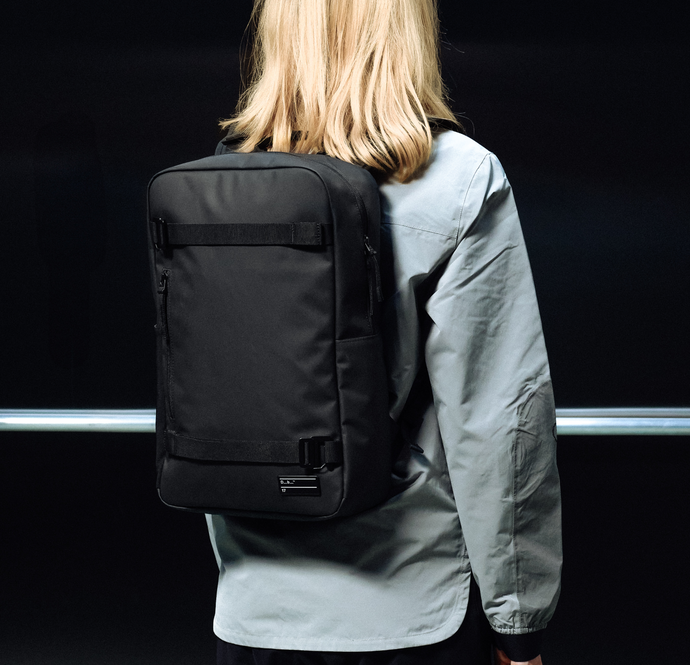
Best for:
- Daily use
- Commuting
- Light travel days
- Essentials only
These backpack sizes are about simplicity and freedom of movement.
Db Journey options:
- Essential Backpack 12L – Minimal, lightweight, and ideal for city days or commuting.
- Daypack 17L– A little more room without becoming bulky; perfect for everyday carry and travel days.
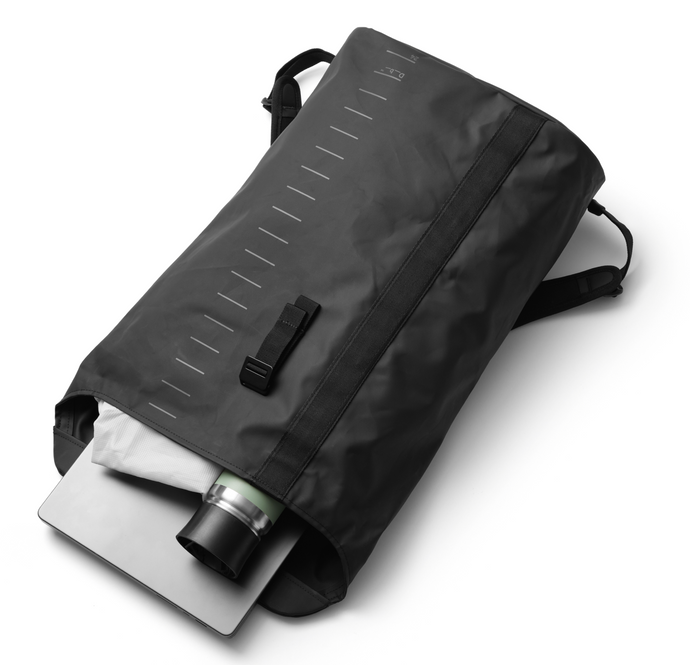
20–25L: All-Day & Active Use.
Best for:
- City exploring
- Transit-heavy days
- Short hikes or active travel
- Carrying layers, snacks, and tech
This range balances comfort and versatility.
Db Journey options:
- Hugger Backpack 20L – Compact, structured, and comfortable for long days on the move.
- Hugger Backpack 25L – A flexible step up when you want extra space without losing mobility.
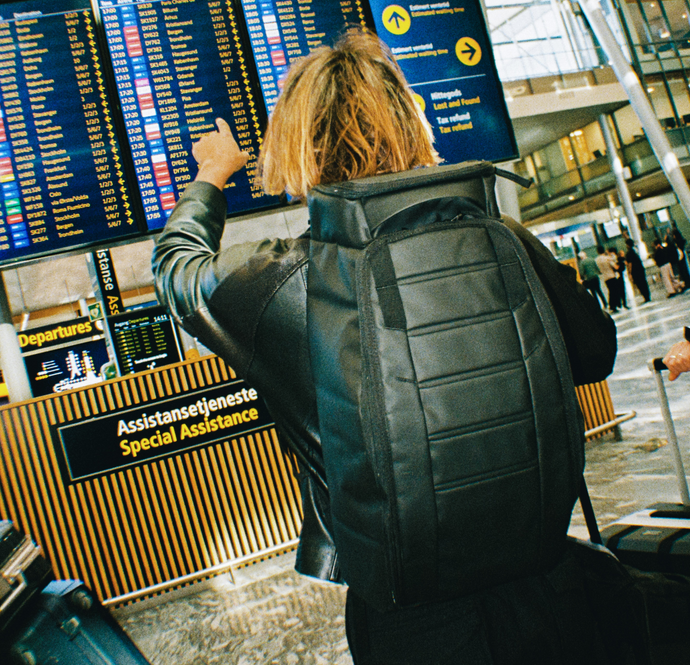
26–30L: Travel & Overnight Backpacks.
Best for:
- 1–3 night trips
- Minimalist travel
- Carry-on backpacking
- Work + travel hybrid use
This is the sweet spot for travelers who want one backpack to do it all.
Db Journey options:
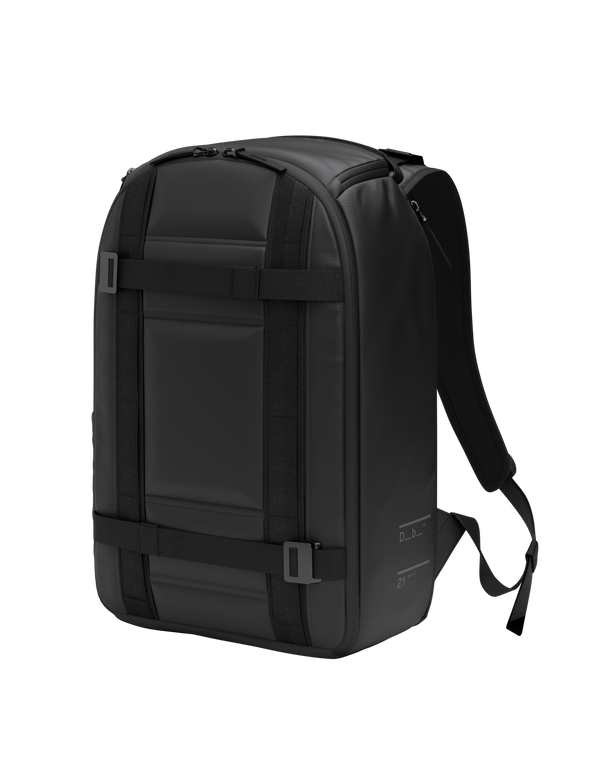
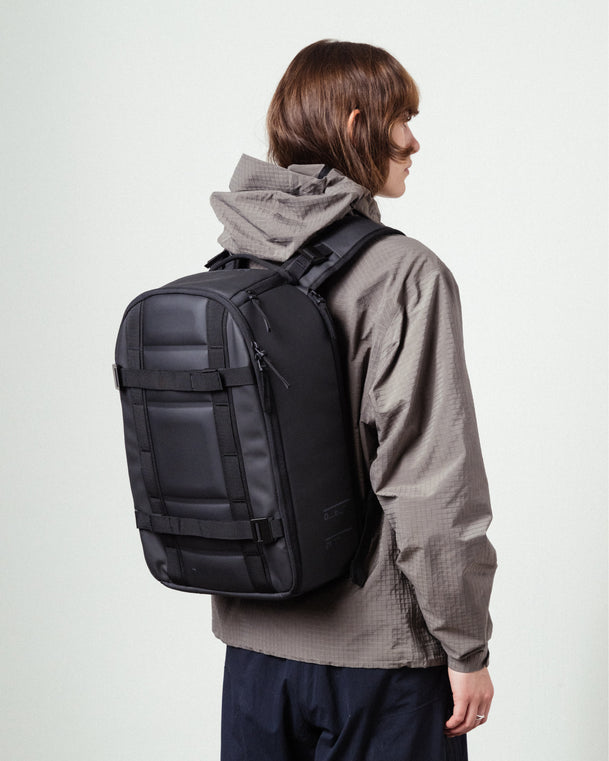
- Ramverk Backpack 26L – A clean, organized travel backpack designed for movement.
- Hugger Backpack 30L – Extra capacity for weekend trips and longer travel days.
Carry-On Travel & Front-Access Backpacks.
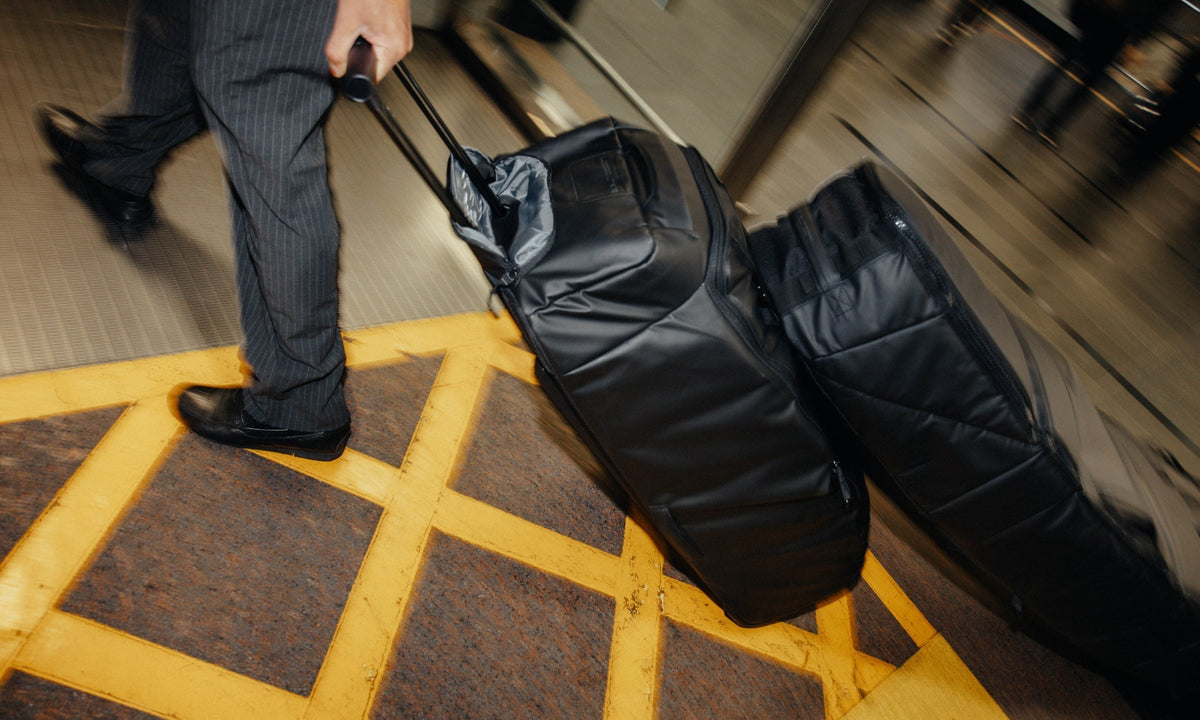
When your backpack becomes your main luggage, access, structure, and comfort matter more than ever. For air travel, the goal is a backpack that packs efficiently while staying carry-on friendly.
Most airlines allow carry-on luggage up to roughly 45 liters, making backpacks below this threshold ideal for travel by plane, train, or bus.
Db Journey backpack options:
- Essential Rolltop Backpack 32L – A structured, travel-ready backpack designed for efficient packing, easy access, and long days in transit.
- Roamer Duffel 40L – A larger carry-on–friendly backpack with extra capacity, ideal for weekend trips and minimalist one-bag travel.
These backpack sizes work best when you want:
- One backpack for your entire trip
- Smart internal organization for clothes and tech
- Comfortable carry through airports and cities
- Carry-on compatibility without sacrificing mobility
For most travelers, 30–40L backpacks sit right in the sweet spot between space and freedom of movement.
Also check out our: The Best Ski Trip Accessories to Bring on Your Next Journey
What to Look for in Any Backpack.
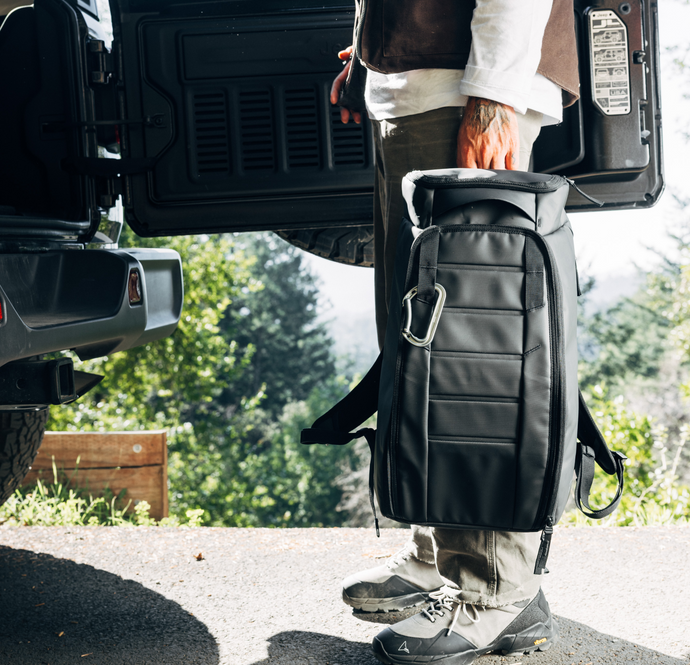
No matter the size, a good backpack should support movement.
Key features to prioritize:
- Comfortable, adjustable shoulder straps
- Breathable back panels
- Stable weight distribution
- Smart internal organization
- Easy access (top, front, or back panel)
Db Journey backpacks are designed to feel like an extension of your body – not a burden.
Fit Matters More Than Capacity.
Backpack size and backpack fit are not the same thing.
A well-fitted 25L backpack will always feel better than an oversized pack that doesn’t sit right. Try backpacks with weight inside, adjust the straps, and notice how the load distributes across shoulders and back.
Choose comfort first.
Db Journey has backpacks for all adventures. Check out our:
Choose Movement Over Maximum.
The best backpack size isn’t the one that carries the most – it’s the one that lets you move freely.
When your backpack complements your travel style, packing becomes easier, walking feels lighter, and transitions feel seamless. Think purpose over volume. Design over excess. Movement over metrics.
Pack intentionally. Move freely. Explore boldly.