


How Do I Choose a Good Gym Bag: A Complete Buying Guide.

How do I choose a good gym bag? Start with your routine: how you get to the gym, what you bring and where you go afterward. Then check six things: size, a separate space for shoes, how it carries, what it's made of, the pockets and its style. A bag that gets those six right is a good gym bag.
Most gym bags that end up at the back of a closet fail one of those tests. They're too big, too stiff or full of pockets for things nobody brings. Buy for the week you actually have, not the one in the ad.
Types of Gym Bags Compared.
|
Type |
Best For |
Strong Point |
Trade-Off |
|
Gym duffel |
Driving to the gym and bigger loads |
Opens wide and packs fast |
Carried by hand or on one shoulder |
|
Gym backpack |
Walking, cycling and public transit |
Weight on both shoulders |
Shoes and clothes often share one space |
|
Duffel backpack |
Mixed commutes |
Duffel space with backpack straps |
Bulkier on your back than a slim backpack |
|
Tote |
Short sessions and studio classes |
Quick to open and fine at the office |
Little room for shoes |
|
Weekender |
Training plus a weekend away |
Room for two days of clothes |
Too big for a quick session |
For most people it comes down to a duffel or a backpack. Not sure what makes a bag a duffel? Read What Is a Duffel Bag? for the basics.
Start With Your Routine.
The right bag depends less on the gym and more on the rest of your day. Ask yourself two questions.
When do you go? Training before work means room for work clothes and maybe a laptop. A lunchtime class needs far less.
Where do you go after? If the bag comes to the office or to dinner, it should look the part.
What Size Gym Bag Do You Need?
Size is where most people go wrong, usually by buying too big. An oversized bag is heavier, floppier and harder to fit in a locker.
|
Volume |
What It Holds |
Good For |
|
15 to 20 liters |
Workout clothes, a water bottle and a small towel |
Classes and quick sessions in the shoes you wear there |
|
25 to 30 liters |
Sneakers, a change of clothes, a towel and a toiletry bag |
Most sessions with a shower afterward |
|
35 to 40 liters |
All of that plus work clothes, a laptop or swim gear |
Training before work or two sessions in one day |
|
60 liters |
Several days of clothes and gear |
Tournaments and trips |
If you're torn between two sizes, pick the smaller one. You'll pack less and carry less. Our guide Backpack Sizes explains what liters mean in real life.
Keep Shoes and Sweaty Clothes Apart.
This matters more in a gym bag than in any other bag. Dirty soles and damp clothes should never touch a clean shirt.
A shoe compartment is the simplest fix. Our Hauler Gym Bag 30L has a ventilated footwear compartment that keeps your shoes apart from your workout gear. It fits sneakers up to EU size 50.
No shoe compartment? Pack your shoes in a shoe bag, a packing cube that has its own shoe section or a roll-top dry bag. Each one does the same job, and you can move it from bag to bag.

Choose How You Want to Carry It.
How you carry a bag matters more than how it looks on the shelf. A bag that hurts after ten minutes soon gets left at home.
-
Handles and a crossbody strap: easy for the car, the train and short walks. The Hauler Gym Bag 30L switches from padded handles to a crossbody strap you can adjust.
-
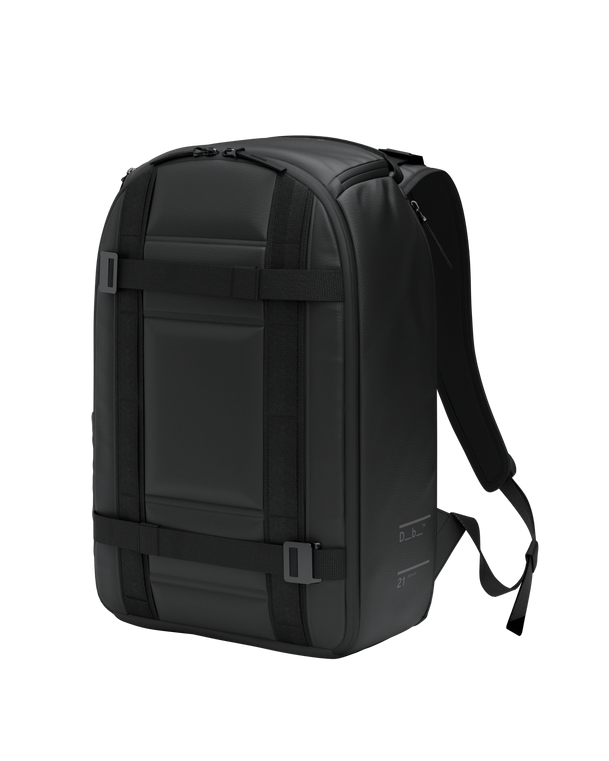
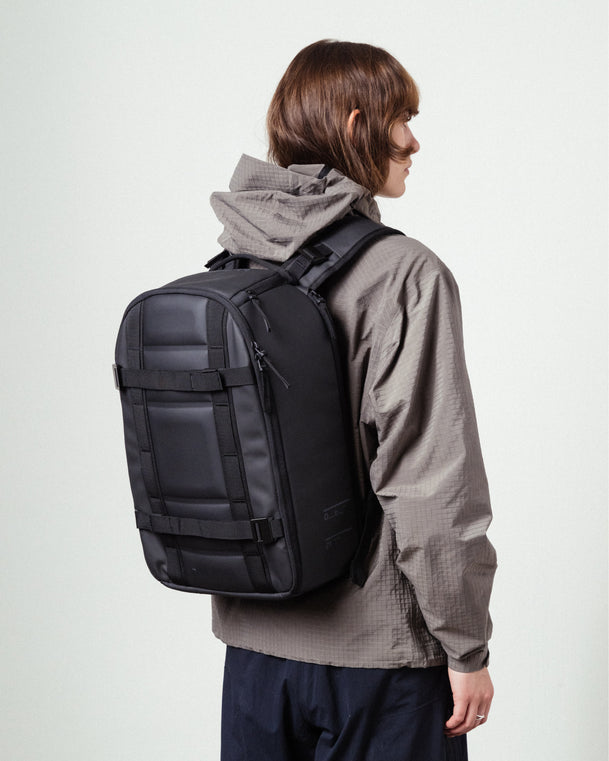
Backpack straps: the best choice for cycling and longer walks. Our Roamer duffels come with a chest strap as well as shoulder straps, so the duffel rides on your back.
-
Tote straps: fine for short trips and studio classes. Heavy loads end up on one shoulder.
Materials That Handle Sweat and Rain.
A gym bag lives a rough life. Wet towels, rainy commutes and locker-room floors all take their toll.
Look for an outer fabric that is water resistant and easy to wipe clean. A sturdy base helps too, because the bag will sit on wet floors. Fully waterproof fabric is rarely needed for the gym.
The Hauler Gym Bag 30L uses a tough face-coated twill. Our patented Rib Cage Technology™ helps it hold its shape, even when it's empty. Our Roamer duffels use recycled, weather-resistant materials.
Pockets That Actually Help.
More pockets aren't better. The right ones are. I'd look for four:
-
An outside pocket for a water bottle or your gym pass.
-
A small zipped pocket for cards and a key clip for keys.
-
A laptop sleeve, if you train before or after work. The Roamer Duffel Backpack 25L has one that fits up to a 16-inch MacBook Pro.
-
A spot for wet things, built in or added with a dry bag.
Anything beyond that is a bonus at best. At worst it's ten places to lose your headphones.
Pick a Color and Style That Lasts.
A bag you like is a bag you take. Start with the color. Dark shades hide scuffs from locker room floors and wet benches. Light shades look fresh but show dirt sooner. Many gym bags are black. A colored one is easy to spot in a crowded locker room, and nobody takes yours by mistake.
Then look at the shape. Clean lines and few extras work at the gym and at the office. Our Hauler Gym Bag 30L is designed in Scandinavia with clean lines and a timeless silhouette. It comes in Black Out, Basil Green, Blue Hour and Affogato Brown.
Three Checks Before You Buy a Gym Bag.
1. Pack a Normal Session at Home.
Lay out what you bring on an ordinary day, not your best-prepared one. If you're not sure, start with a list of what to put in a gym bag. Then compare the pile with the bag's size before you order.
2. Check Your Locker.
Gym lockers come in very different sizes, so check yours before you order. A soft bag squeezes into a tight locker. A structured one keeps its shape and needs the space.
3. Check the Zippers, Seams and Base.
A gym bag gets dropped, stuffed and dragged across wet floors. Look at the stitching around the handles and straps. Smooth zippers and a solid base are signs it will last.

The Best Gym Bag Is the One You Grab Every Day.
Forget the extras you'll never use. If you can grab it without thinking, you choose well.
Ready to look? Browse our gym bags for backpacks, totes and the Hauler Gym Bag 30L. For a bag that can also handle a weekend away, see our gym duffel bags.
Frequently Asked Questions.
What Is a Good Gym Bag?
A good gym bag fits a normal session without sitting half empty. It keeps shoes and sweaty clothes away from clean ones and carries comfortably all the way to the gym. A water-resistant, wipe-clean fabric and a few easy-to-reach pockets help it last and stay organized.
Is a Backpack or a Duffel Better for the Gym?
A backpack is better for walking, cycling or public transit, because the weight sits on both shoulders. A duffel is better for driving and bigger loads, because it opens wide and is quick to pack. A duffel backpack combines both, with one large compartment and shoulder straps.
Do You Need a Gym Bag With a Shoe Compartment?
A shoe compartment is worth having for anyone who changes shoes at the gym. It keeps dirt and smells away from clean clothes and towels. Without one, a shoe bag works, and so does a packing cube with a separate shoe section.
Should a Gym Bag Be Waterproof?
Most gym bags only need to be water resistant, which handles rain, wet towels and damp floors. Fully waterproof bags suit swimmers and anyone who cycles to the gym in heavy rain. A waterproof dry bag inside a regular gym bag is a simple middle ground.
Can a Gym Bag Double as a Weekend Bag?
A gym bag of 30 to 40 liters can double as a weekend bag. That is enough room for one or two nights of clothes plus toiletries. A shoe compartment or backpack straps make it even more useful on short trips.