


Can I Take My Camera Bag on the Plane? Everything to Know Before You Fly.

Yes. The TSA allows cameras, lenses and tripods in both carry-on and checked bags, but your camera bag belongs in the cabin. Most airlines count a small camera bag as your personal item and a camera backpack as your carry-on. Spare lithium batteries must stay in the cabin no matter what. Pack them in your camera bag, not your suitcase.
Flying with camera gear is easy once you know the rules. The tricky part is that they come from three places. The TSA decides what gets through security. The FAA decides where batteries go. Your airline decides how big and heavy your bag can be.
Camera Gear on a Plane at a Glance.
|
Item |
Carry-On |
Checked |
What to Know |
|
Camera bodies and lenses |
Yes |
Yes |
Keep them in the cabin |
|
Spare lithium batteries up to 100 Wh |
Yes |
No |
Most camera batteries are about 16 Wh |
|
Spare batteries of 101 to 160 Wh |
With airline approval |
No |
Maximum two per passenger |
|
Power banks |
Yes |
No |
Same rules as spare batteries |
|
Tripods and monopods |
Yes |
Yes |
Must fit the bin or under the seat |
|
Drones |
Check with your airline |
Check with your airline |
Drone batteries follow the battery rules |
|
Undeveloped film |
Yes |
Yes |
Ask for a hand inspection |
Personal Item or Carry-On?
Most US airlines let you bring one personal item and one carry-on. Your camera bag can be either. It depends on its size.
|
Airline |
Carry-On |
Personal Item |
|
United |
22 x 14 x 9 in |
17 x 10 x 9 in |
|
American |
22 x 14 x 9 in |
18 x 14 x 8 in |
|
Delta |
22 x 14 x 9 in |
Camera bag listed, no size given |
|
Southwest |
24 x 16 x 10 in |
Small camera listed, no size given |
|
Alaska |
22 x 14 x 9 in |
No size given |
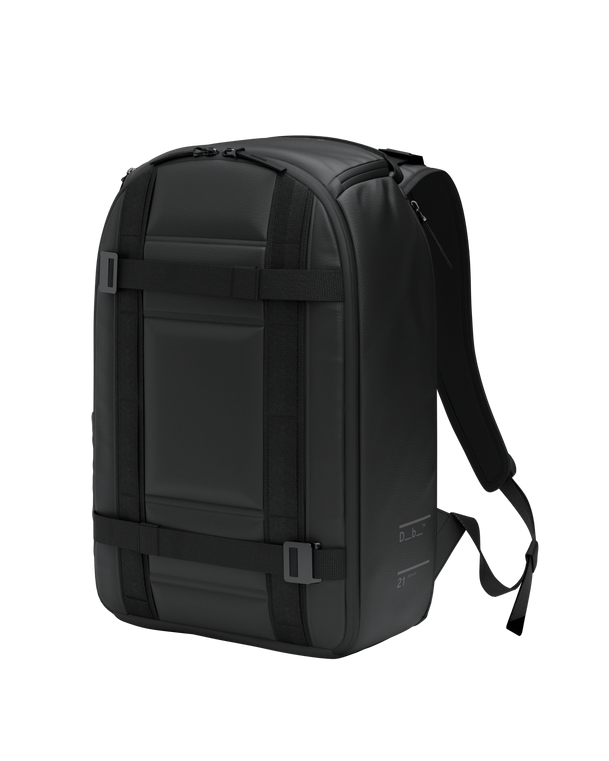
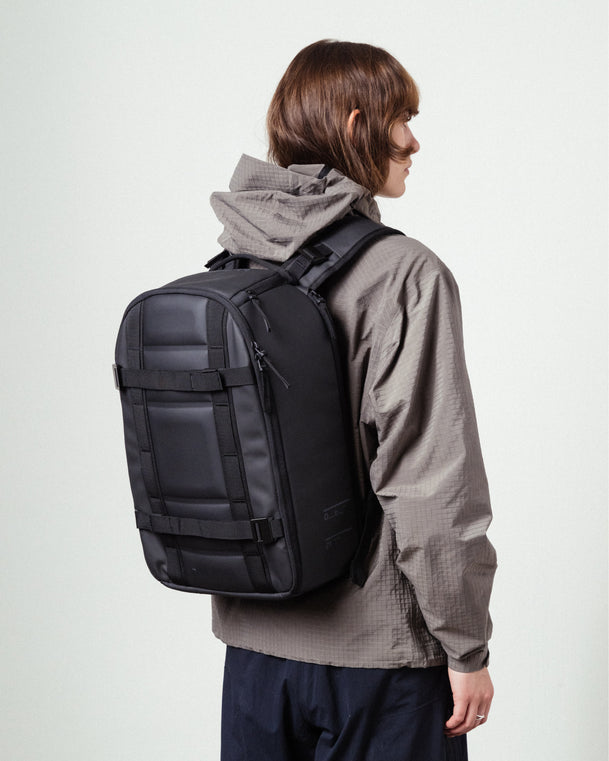
A camera bag that fits under the seat counts as your personal item. That leaves room for a carry-on with clothes in the overhead bin. A full camera backpack is usually your carry-on instead. Our Ramverk Pro Backpack 32L measures 19.7 x 12.2 x 8.3 inches, inside the common 22 x 14 x 9 limit.
United even lists a camera among the extra items you can bring on top of your carry-on and personal item. I wouldn't build a trip around that. Gate agents have the final word on what fits. For the general rules on backpacks, see our guide can you bring a backpack on a plane.

Why Your Camera Should Never Go in the Hold.
You're allowed to check a camera. I'd never do it.
Checked bags get thrown, stacked and sometimes lost. A lens that survives years of shooting can crack in one bad drop onto a baggage cart. And if your bag goes missing, your shoot goes with it.
There's a practical reason too. Spare batteries can't go in checked bags at all. So you'd be splitting your kit in two before you even leave home.
Flying a European airline? Watch the two-bag rule. British Airways, for example, warns that its larger cabin bag may need to go in the hold and should not hold valuables or electronics. Its smaller handbag is the one guaranteed to stay with you. Put your camera there.
The Battery Rules You Can't Skip.
Batteries are where most travelers get caught out. The FAA rules are simple once you see them written down.
-
Spare batteries go in the cabin only. That includes power banks and charging cases.
-
Each lithium-ion battery can be up to 100 Wh. Most camera batteries are far below that. A Sony NP-FZ100 is about 16 Wh.
-
Larger batteries of 101 to 160 Wh need airline approval. You can bring two at most. These are usually video batteries.
-
There's no set limit on the number of standard spares. They just have to be for your own use. Some airlines set stricter limits, so check yours.
-
Protect the terminals. Use the original packaging, a battery case, tape or a sleeve in your camera bag.
Not sure of the rating? Multiply the volts by the amp hours. A 7.2 V battery with 2,280 mAh is 7.2 x 2.28, which is about 16 Wh.
One rule surprises people. A carry-on that gets checked at the gate still can't take spare batteries into the hold. Pull them out on the jet bridge and keep them on you. I keep mine in one small pouch for exactly that moment.

Getting Through Security With a Camera Bag.
In standard TSA lanes you have to take out electronics larger than a phone and put them in a bin. Be ready to lift out your camera body and laptop. In TSA PreCheck lanes you can usually leave laptops in your bag.
A few things make it faster:
-
Pack so your camera comes out in one move. Put it on top or in a section you can open without unpacking the rest.
-
Keep caps on. Lens caps and a body cap protect the glass while your gear sits in an open bin.
-
Use an insert. Our Ramverk Camera Inserts have a top handle, so you can lift the whole padded block out of your bag and into the bin.
-
Watch your bin. Keep your eyes on your gear until it comes out the other side.
For the bag itself, our guide on how to pack a camera bag covers dividers, lenses and small items step by step.
Film, Drones and Tripods.
Film. Put undeveloped film in your carry-on and ask for a hand inspection at the checkpoint. That's the TSA's own advice. Film makers have also warned that the CT scanners now used at many airports can fog undeveloped film. One more reason to ask for that hand check.
Drones. The TSA allows drones through the checkpoint, but your airline has the final say. Check its policy before you fly. Drone batteries follow the same lithium battery rules as camera batteries.
Tripods and monopods. Both are allowed in carry-on and checked bags. The catch is length. A tripod has to fit in the overhead bin or under the seat. If yours doesn't fit, check it and keep the head in your camera bag.
Flying Abroad? Check the Weight Too.
US airlines don't publish a weight limit for carry-ons on their main baggage pages. Many international airlines do, and camera gear gets heavy fast.
-
Lufthansa: 8 kg (about 17.6 lb) for the carry-on, plus a personal item of 40 x 30 x 15 cm.
-
Air France (economy): 12 kg (about 26.4 lb) for your hand baggage and small bag combined.
-
Singapore Airlines (economy): 7 kg (about 15.4 lb) per piece.
If you're close to the limit, wear the heaviest pieces. A camera around your neck and a lens in a jacket pocket don't go on the scale.

Your Pre-Flight Camera Checklist.
Run through this the night before you fly:
-
Measure your camera bag and compare it with your airline's personal item and carry-on limits.
-
Weigh it if you're flying an international airline.
-
Pack every spare battery and power bank in the cabin bag, with the terminals protected.
-
Put the batteries you'll need in one pouch you can grab if your bag is gate-checked.
-
Put your name and phone number inside the bag, not just on the tag.
-
Put film in a clear bag so you can hand it over for inspection.
-
Back up your memory cards. Bags get lost, even carry-ons.
Frequently Asked Questions.
Does a Camera Bag Count as a Personal Item?
A camera bag counts as a personal item if it fits under the seat in front of you. United's personal item limit is 17 x 10 x 9 inches and American's is 18 x 14 x 8 inches. Delta and Southwest list camera bags or small cameras as personal items. Larger camera backpacks usually count as a carry-on.
Do You Have to Take Your Camera Out at Airport Security?
In standard TSA lanes, electronics larger than a cell phone must be removed from the bag and placed in a bin, which can include camera bodies. In TSA PreCheck lanes, travelers do not need to remove laptops from their bags.
Can You Put a Camera in Checked Luggage?
The TSA allows cameras in checked luggage, but it isn't recommended. Checked bags are handled roughly and can be delayed or lost. Spare lithium batteries are not allowed in checked bags, and any device left in a checked bag must be fully powered off.
How Many Camera Batteries Can You Bring on a Plane?
The FAA sets no quantity limit for spare lithium-ion batteries of up to 100 Wh, as long as they are for personal use and travel in carry-on baggage. Batteries of 101 to 160 Wh need airline approval and are limited to two per passenger. Some airlines set stricter limits.
Can You Bring a Film Camera on a Plane?
Yes. Film cameras are allowed in carry-on and checked bags. The TSA recommends keeping undeveloped film, and cameras loaded with it, in carry-on bags and asking for a hand inspection at the security checkpoint.