


Our Guide to Backcountry Skiing.

Backcountry skiing is a fun, yet challenging sport for both experienced skiers and snowboarders. Are you a thrill-seeker and looking for a new sense of freedom? This guide to backcountry skiing will help you nail down the basics, enabling you to go on your next backcountry journey safely.
What is Backcountry Skiing?
Backcountry skiing is skiing on unmarked or unpatrolled areas either inside or outside a ski resort’s boundaries. As the name suggests, backcountry is a remote area that is often difficult to access. Experienced skiers and thrill-seekers often want the challenge that the backcountry brings, which is why they access these unmarked areas while skiing at a ski resort. That being said, there are times where backcountry skiing includes the use of ski lifts that are accessible from within a resort.
Looking for your next ski destination? Read our guide to the best ski resorts in the U.S.
Types of Backcountry Skiing.
Frontcountry.
Frontcountry skiing is off-trail skiing within the ski resort with easy access to ski lifts.
Slackcountry.
Slackcountry skiing is skiing in terrain outside the ski area that is accessible by ski lifts. There is no use for skins or bootbacks.
Sidecountry.
Sidecountry skiing is skiing on terrain outside the ski area boundary that is still accessible by ski lifts. It often includes hiking, skinning, or climbing to the ski area.
Backcountry.
Backcountry skiing is skiing in remote areas not within the ski area.

Off-piste, Freeriding, or Backcountry Skiing?
Backcountry skiing is often used interchangeably with off-piste skiing, which is in many ways its European equivalent. When skiing in Europe, off-piste is the most commonly used term for skiing in unmarked or unpatrolled terrain. When moving off-piste or in the backcountry, experienced skiers express a sense of freedom by not being restrained by the smooth, groomed slopes within a ski area.
For example, our very own CMO went cat snowboarding in Canada with Sage Kotsenburg, Db Ambassador, Olympic gold medalist, two-time Rider of the Year, and winner of the Supernatural backcountry event. The Canadian backcountry of Baldface Lodge is a place straight out of a snowboarder’s dream, where the unpredictable nature of the adventure was exactly what made this experience an adventure.
Backcountry Skiing vs. Alpine Skiing.
Backcountry skiing differs from alpine skiing by the fact that alpine skiing is typically done on groomed trails, within a ski resort’s boundary. In contrast, freeriding, telemark and ski touring are different styles of skiing that can occur both within and outside a ski resort’s boundary.
Risks when Going Backcountry Skiing.
- Avalanches: Avalanches are a real risk in the backcountry, which is why you should always pack avalanche gear neatly in your ski or snowboard backpack.
- Exhaustion: Nutritious food and water is key to maintaining energy and getting to your destination. Exhaustion becomes a deadly threat if you’re not prepared and packed for your journey.
- Weather conditions: High-altitude destinations can be unruly and unpredictable, which is why you should plan well in advance by looking at forecasts and prepare for changing and challenging weather conditions by bringing extra layers, avalanche gear, and extra snacks.
- Cliffs, rock falls, and tree wells: It goes without saying that the backcountry is wild and unpatrolled, making it your responsibility to scope out the terrain. Be wary of any risks in the terrain.
- Isolated terrain: Naturally, the backcountry terrain is a risk in itself. It’s not for the weakest of hearts. You need to be fit, well-equipped, and experienced in handling this beautiful, yet daunting nature.

Getting Started as a Newbie or as an Advanced Skier.
If you’re experienced in skiing, but not used to skiing in non-groomed slopes or backcountry terrain, there are some techniques and knowledge you must have before setting your sights on the mountain.
Avalanche courses.
We all know that checking out the freshest gear for your trip is much more exciting than doing lessons. However, before a backcountry adventure, you must do schooling before gear. This involves getting educated on avalanches and backcountry travel, including avalanche education.
In a nutshell, avalanche education is how to safely travel in avalanche terrain and how to rescue partners in case of a disaster. You need knowledge and insight into how to effectively use avalanche gear you brought – without it, it is useless. This knowledge you can get in avalanche awareness classes or formal avalanche courses.
Backcountry techniques.
You must assess your skills and work on fine-tuning your skiing and snowboarding skills if needs be. The key parameter is how comfortable you are in traveling uphill. In most cases, you are dependent on having some climbing skins with you. There are pieces of carpet that you click onto your skis or splitboard and help to provide traction when going uphill.
Many of the backcountry skills and techniques boil down to how you master the skins. Put plainly, this is about how and at which time you remove your skins and lock the ski boot into the binding.
Beginner areas.
Plan your first trip well in advance, including gathering friends, checking the forecast, and use guidebooks or get expert advice when planning. Start in a controlled environment and travel with a group. A good idea could be to choose a ski destination that has a wide range of advanced, groomed slopes.
Outside of this, you need to bring the necessary equipment and gear.
Backcountry Gear.

Backcountry Skis.
Backcountry skis are characterized by being lightweight and not too narrow. We want the skis to be quite wide, but still lightweight, because this maximizes our chances of traveling uphill for longer distances. Too heavy skis will drag us down and limit our momentum, while narrow skis won’t perform well in deep, off-the-path powder snow.
Pack in ski bags.
It can be a pain in the ass to travel with your snow gear. But it doesn’t have to be. Our Snow Roller is a long, compressible ski bag meant to streamline the packing and transport of skis and ski poles. It’s a spacious bag with compartments that also facilitate space for goggles and helmets. Additionally, its puncture-proof wheels pave the way for a smooth journey.
The Snow Essential Ski Bag is a more paired-down, but equally functional ski bag for travel. Its straps are easy to adjust and fit comfortably on your shoulders when you’re on the go. It is also available as a snowboard bag.
Poles.
Skis are nothing without poles. And definitely something you’re dependent on when going uphill in the backcountry terrain. Your ski poles must be set to a length that corresponds to your height, but luckily many suppliers on the market offer adjustable poles. That way you can make them longer for when traveling uphill and shorter when descending.

Backcountry Snowboards.
Many riders prefer a splitboard, which is a type of modifiable snowboard that splits in half. When it separates down the middle, it functions like a pair of skis. And why is this desirable? Because you can modify your journey to the terrain and whether you’re going uphill or travelling downhill. Many use the ski function uphill and cruise downhill afterwards.
Take advantage of snowboard bags.
Our Snow Essential Snowboard Bag is a sleek snowboarding bag that fits itself on your board, meaning you don’t have to fuss with fastenings or adjustments. It’s an auto-adjusting bag featuring our Length Adjustment System™ and crafted in durable nylon. Grab it, throw it on your shoulders, and go.
 Boots.
Backcountry skiing boots differ from alpine skiing boots in that they are walkable, meaning that they both have a ski mode and a walk mode, given the flexibility to travel uphill much more comfortably. On the other hand, many backcountry snowboarders use the same type of snowboarding boots that they use for regular snowboarding.
Use boot bags.
A solid boot bag should do more than just carry your gear – it should simplify the entire day. Our ski boot bags are shaped to fit your boots securely, provide space for essentials, and stay comfortable to carry through airports, parking lots, or resort villages.
Built for boots and all your snow-day gear, the Hugger Bootpack 45 L is durable, spacious, and ready for rough conditions. It features a 45 L main compartment, a full-zip front panel that doubles as a changing mat, and a water-resistant, wipeable interior for wet or muddy boots.
 Climbing skins.
Climbing skins are pieces of carpet that you attach to the bottom of your skis or splitboard to give you a better grip of the terrain when moving uphill. When you reach the top, they are easy to slide off and slip into your backpack before you’re ready to descend.
Avalanche gear.
When cruising down the mountain or in the backcountry, you should never underestimate the danger of an avalanche. That’s why it’s essential to always be equipped with some professional avalanche gear when you’re freeriding or touring. If you get buried in an avalanche, your chances of survival decrease within just a few minutes. But with the right avalanche gear, you can take quick, lifesaving actions in such dangerous situations. And the best avalanche gear for the highest survival odds is an avalanche vest.
The safe choice – our snow vests.
Our Snow Pro Vest is designed with one purpose in mind: to have your back in case of an emergency, without being a hindrance while riding or jumping off the lift. Created in collaboration with Sage Kotsenburg, the Snow Pro Vest is equipped with avalanche safety layers tailored for off-piste terrain.
If you’re looking for a more advanced avalanche vest, we recommend The Snow Pro Vest with Safeback. This backcountry saftypack comes equipped with the Safeback SBX system – an innovation that actively supplies clean air for up to 90 minutes to those trapped in an avalanche.
What to Bring in Preparation of an Avalanche?
In addition to your avalanche vest, there are some essential bits that you should pack and carry with you in the backcountry terrain, which are the following:
- Avalanche beacon: A battery powered radio transceiver that emits a signal, which rescuers can pick with their own transceivers. These interpret the signal into a visual and audible display that assists them in the search.
- Avalanche shovel: Snow shovel that is designed for backcountry risks.
- Avalanche probe: A collapsible pole used to probe for a buried victim.
Checklist: What Gear to Bring on a Backcountry Skiing Trip?
- Backcountry skis
- Ski poles
- Backcountry ski boots
- Backcountry snowboards (consider a splitboard)
- Backcountry snowboard boots
- Climbing skins
- Helmets
- Goggles
- Avalanche gear (beacon, shovel, and probe)
- Extra layers and dry clothes
- Nutritious foods and drinks (water is essential)
Carry Your Gear in a Ski and Snowboard Backpack.
A backcountry adventure isn’t just about getting down the slopes – it’s about carrying the right gear, staying organized, and doing it comfortably. Whether you need a small snowboard backpack for day trips or a full-sized ski carrying backpack for backcountry adventures, we have a pack to match your style and needs.
The Hugger Backpack.
A versatile all-rounder for day trips and lift riding. Our Hugger Backpack features a roll-top design to expand or compress volume, multiple compartments for gear organization, and padded straps for comfortable carrying. Durable materials keep your equipment safe, whether you’re hitting the slopes or exploring town.
The Backcountry Backpack.
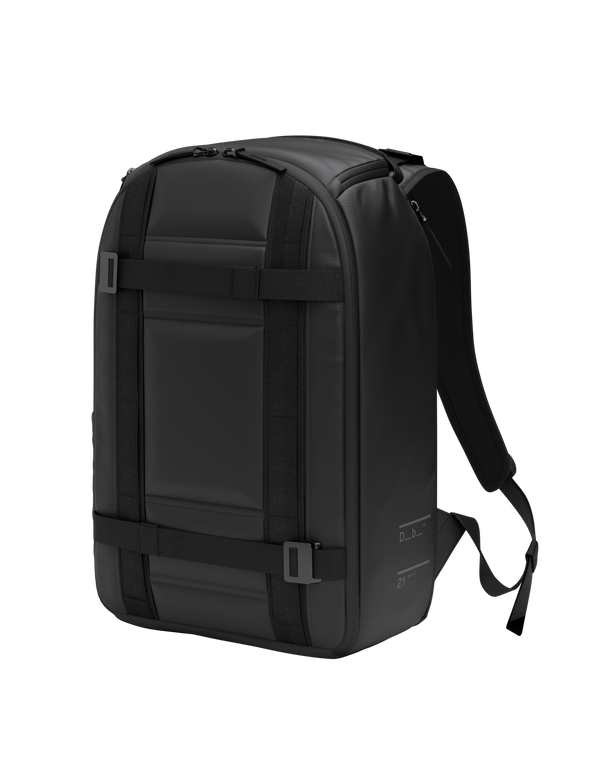
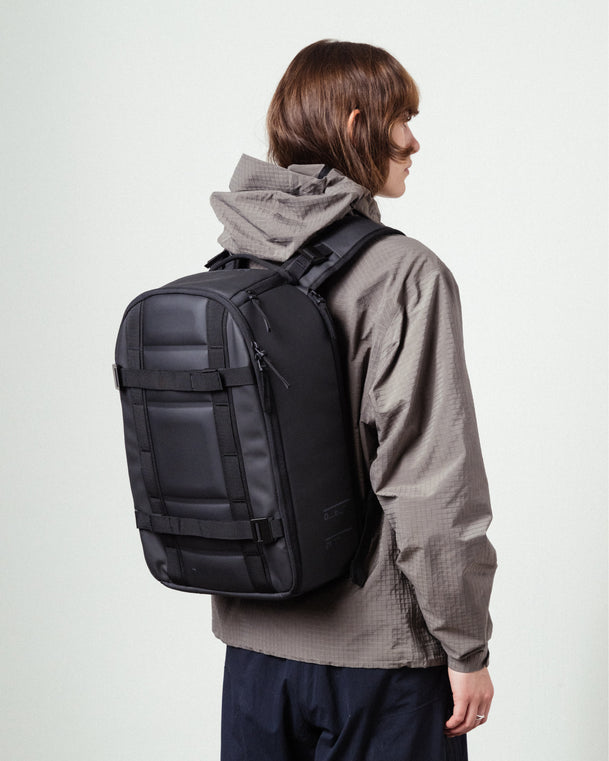
The Backcountry Backpack is the perfect ski and snowboard backpack for off-piste journeys and life off the mountain. The slim-fit design makes it lift-friendly and easy to handle on the slopes and the designated internal avalanche compartment secures the safety of your journeys.
Advanced Skier Destinations.
If you’re well versed in advanced, backcountry skiing in challenging terrain, you can get some inspiration of where to travel next in our guides to the best ski resorts for advanced skiers and snowboarders.
- The best ski resorts in Europe for advanced skiers
- The best ski resorts in the U.S. for advanced skiers
Read One of Our Other Guides.
Interested in learning more about the basics of telemark or alpine skiing, or want some expert insight into which techniques to fine-tune? Check out our guides and get inspired for the journey.
Your Questions Answered.
Backcountry skiing.
What is considered backcountry skiing?
Backcountry skiing covers skiing that takes place in non-patrolled, wild terrain outside of the ski resort area. The terrain is accessible by hiking uphill, or sometimes by ski lifts from within the ski resort.
What is the difference between alpine skiing and backcountry skiing?
The difference between alpine skiing and backcountry skiing is related to where and how the skiing is done. Alpine skiing is typically done on groomed trails, within a ski resort’s boundary. In contrast, backcountry skiing happens on ungroomed terrain, outside of the resort’s ski area.
What are the different types of backcountry skiing?
There are four terms used to describe backcountry skiing, which are:
- Frontcountry skiing: Off-trail skiing within the ski resort with easy access to ski lifts.
- Slackcountry skiing: Skiing in terrain outside the ski area that is accessible by ski lifts (no need for skins or bootbacks).
- Sidecountry skiing: Skiing on terrain outside the ski area boundary that is still accessible by ski lifts. It often includes hiking, skinning, or climbing to the ski area.
- Backcountry skiing: Skiing in remote areas not within the ski area.
How is backcountry skiing related to off-piste?
Backcountry skiing is essentially the equivalent of off-piste skiing which is the common European term for off-boundary skiing. In other words, it covers skiing in ungroomed, unmarked terrain outside of the ski resort’s area.