- Bestseller
2.299 NOK
Items not reserved. Complete your order now to secure your gear!
Your cart is currently empty.
Designed in Scandinavia
A trip with a camera means packing two kits in one: the gear for the shoot and everything you need around it. Our camera bags for travel give your bodies and lenses a protected space and leave room for a laptop, clothes and the rest of the journey.
A good camera bag for travel has two jobs. It keeps fragile gear safe through airports, trains and taxis. And it carries the rest of the trip without turning into a second bag you have to manage.
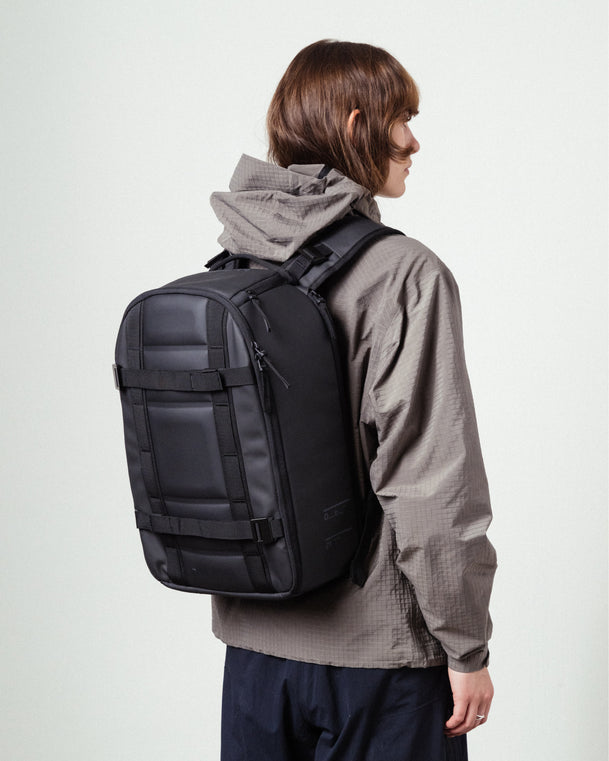
We build for both. Our camera backpacks handle long days on location and work as your cabin bag on the way there. Our front-access carry-ons open at the front, so your camera and laptop come out without unpacking your clothes.
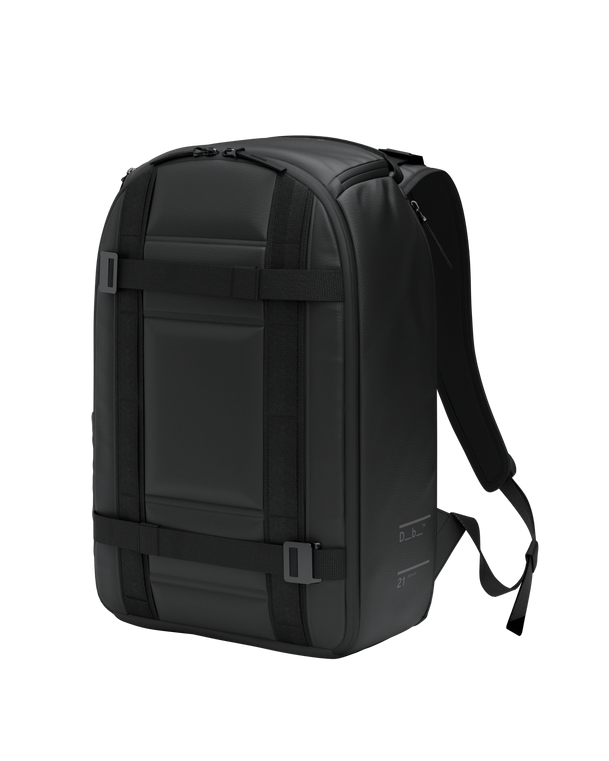
Ramverk Pro Backpack 26L
Volume: 26L
Dimensions (H x W x D): 19.7 x 12.2 x 6.3 in
Weight: 3.3 lb
Camera setup: Camera Insert S or M
Best for: Light kits and day trips
Ramverk Pro Backpack 32L
Volume: 32L
Dimensions (H x W x D): 19.7 x 12.2 x 8.3 in
Weight: 3.4 lb
Camera setup: Camera Insert S, M or L
Best for: Bigger kits and weekend shoots
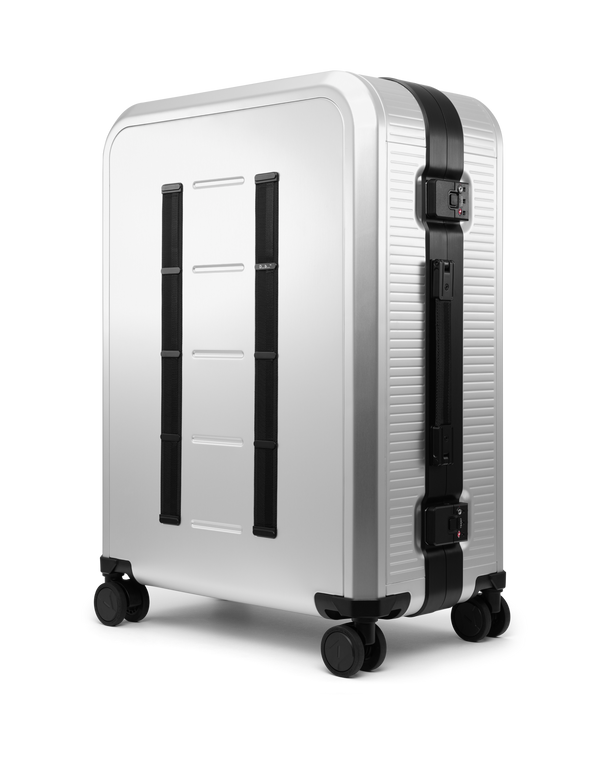
Ramverk Front-access Carry-on
Volume: 38L
Dimensions (H x W x D): 21.5 x 15.2 x 9.1 in
Weight: 8.6 lb
Camera setup: Dual dividers and a 16-inch laptop sleeve
Best for: Short trips with a small kit
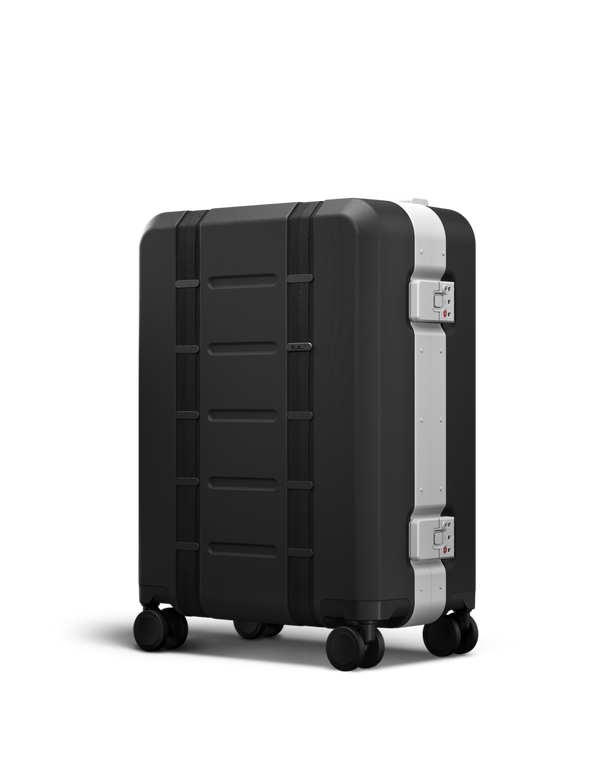
Ramverk Pro Front-access Carry-on
Volume: 36L
Dimensions (H x W x D): 21.3 x 15.6 x 9.5 in
Weight: 9.3 lb
Camera setup: Built to work with our Camera Inserts, including the XL
Best for: Pro kits and work trips
Shoot mostly on foot? Start with a backpack. Fly with a full kit and clothes for a few days? Go for a carry-on.
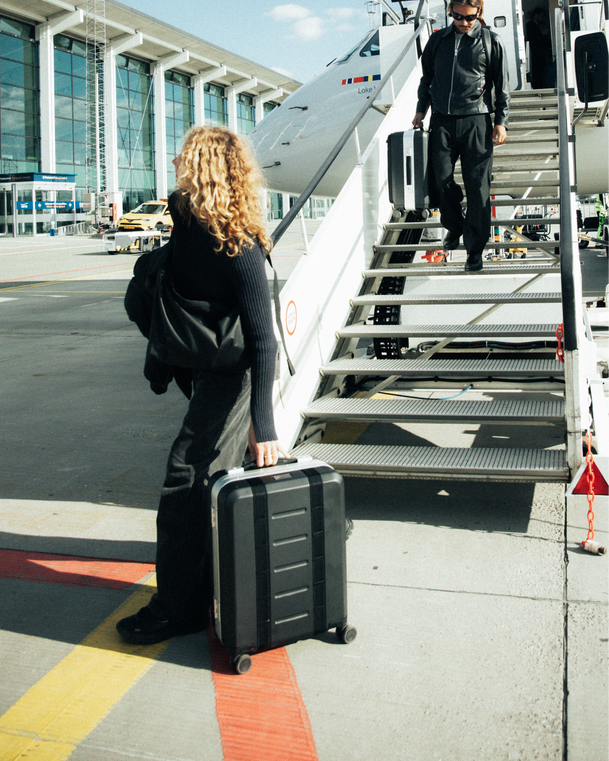
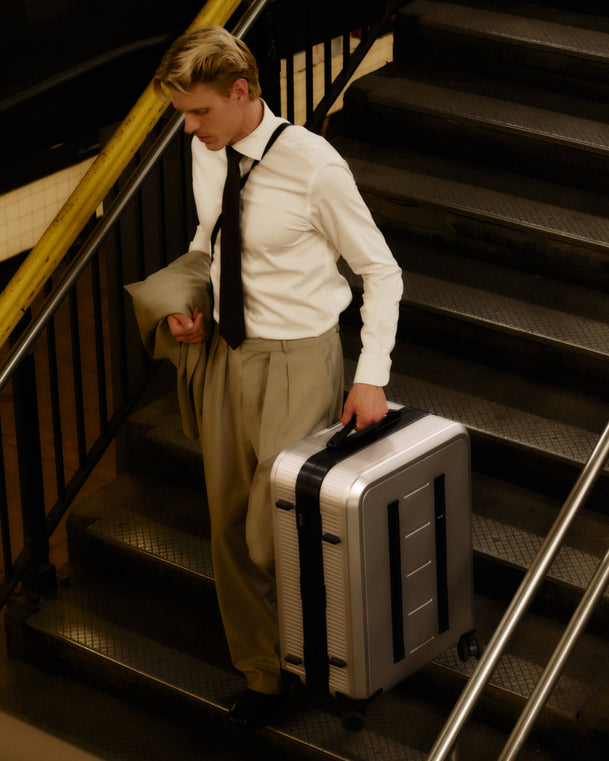
Airport security is where a normal suitcase slows you down. Our Ramverk Front-access Carry-on has a front panel that opens on its own, so your tech comes out while the main case stays shut. The Ramverk Pro Front-access Carry-on goes further, with a full front opening plus a top lid for quick access on the move.
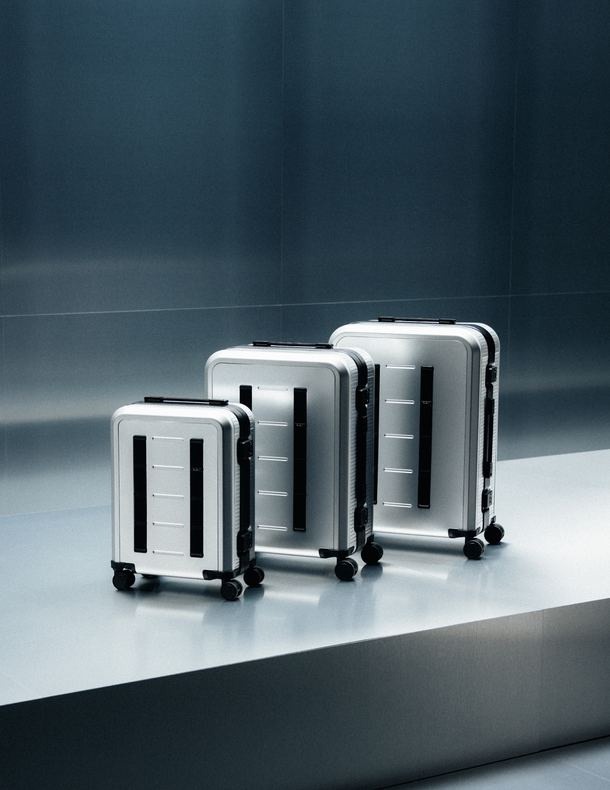
The Ramverk Pro Front-access Carry-on pairs polycarbonate shells with an aluminum frame for a strong protection-to-weight ratio. Our Ramverk Pro Backpacks hide Rib-Cage Technology™ inside, which helps the bag keep its shape around your gear.
Both carry-ons roll on near-silent Japanese Hinomoto 360° wheels. Clip a Ramverk Pro Backpack onto the carry-on with the Hook-Up System™ and you're pushing your whole setup with one hand.
The Ramverk Front-access Carry-on has numerical TSA-approved locks on the main compartment, and the front panel can take an extra TSA lock, sold separately. The Ramverk Pro Front-access Carry-on comes with a detachable TSA numerical lock.
The weekend shoot. A Ramverk Pro Backpack 32L with the L insert in the bottom, a jacket and a change of clothes on top and your laptop in the front compartment. One bag, no check-in.
The full kit, flying. A Ramverk Pro Front-access Carry-on with an XL insert for bodies and lenses, and clothes in the other half of the split shell.
The light trip. A Ramverk Front-access Carry-on with your camera in a padded pouch, your laptop in its sleeve and a few days of clothes behind the dividers.
Pick an insert size on our Camera Inserts page.
Our Ramverk carry-ons are made with 70% recycled polycarbonate and 100% recycled polyester.
Join Db Black to extend the warranty on eligible bags.
A good camera bag for travel protects bodies and lenses with padding or a structured shell, fits airline cabin limits and leaves room for a laptop and personal items. Quick access to the camera and laptop at security, comfortable carrying and lockable zippers also matter on longer trips.
Db's front-access carry-ons are approved for carry-on by many airlines, including British Airways, Lufthansa, Air Canada, Japan Airlines and SAS. They measure about 15.2 to 15.6 inches wide. Some US airlines, including United, Delta and American, list a 14-inch width limit, so check the airline before flying with one.
Camera gear is safer in the cabin. Baggage handling is rough, and a delayed suitcase can mean arriving without a camera. Spare lithium batteries are also not allowed in checked luggage under FAA rules, so a camera backpack or carry-on keeps the whole kit together.
The Ramverk Front-access Carry-on is the lighter option at 8.6 pounds and 38 liters, with a front panel for quick access to tech. The Ramverk Pro Front-access Carry-on weighs 9.3 pounds and holds 36 liters, with an aluminum frame, a full front opening and an included detachable TSA lock. It is also built to work with Db's camera inserts.
Most airlines allow one carry-on and one personal item. Unless the camera backpack is small enough to fit under the seat as a personal item, flying with both usually means checking one of them. Airlines differ, so check the size limits for both bags before traveling.
Keep an eye on your inbox for more news and Db Black perks, and don’t forget to mark us as a safe sender so we don’t end up in your spam folder.
Join Db Black for member benefits made for frequent travellers.
Sign up now to receive
Your ExpertVoice deal.
$[Deal Price]
$[Original Price]
Discount applied at checkout.
On sale now — lower than your ExpertVoice discount.
Not eligible for ExpertVoice discount.
You’ll see your ExpertVoice discount at checkout.