


What to Wear Skiing: The Complete Ski Outfit Guide.

A good ski outfit comes down to three layers. A base layer that moves sweat off your skin. A mid layer that holds warmth. A waterproof shell that keeps snow and wind out. Add a helmet, goggles, gloves and ski socks and you are ready for the mountain.
That is the short answer to what to wear skiing. The longer answer is about getting each layer right, dressing for the forecast and knowing where the extra pieces go when you don't need them. I'll cover all of it.
Your Ski Outfit in Three Layers.
Every layer has one job. Get each one right and the whole system works.
|
Layer |
Its Job |
Good Materials |
Skip |
|
Base layer |
Moves sweat away from your skin |
Merino wool or synthetic |
Cotton |
|
Mid layer |
Traps warm air |
Fleece, light down or synthetic insulation |
Cotton hoodies |
|
Shell |
Blocks snow, wind and wet |
Waterproof and breathable jacket and pants or bib |
Jeans and everyday coats |
|
Accessories |
Protect head, eyes, hands and feet |
Helmet, goggles, gloves or mittens, ski socks, neck gaiter |
Scarves |
Layers beat one big warm jacket. You warm up on the way down. You cool off on the chairlift. Layers let you adjust instead of choosing between sweating and shivering.
Start With a Base Layer That Stays Dry.
Your base layer sits against your skin. Dry skin stays warm. Wet skin gets cold fast.
Merino wool is my first choice. It stays warm when damp and handles a few days of wear without smelling like a locker room. Synthetic base layers dry faster and cost less. Both work.
Wear a top and a bottom. The fit should be close to your body without squeezing. Loose fabric can't move sweat away.
Leave the cotton t-shirt at home. Cotton soaks up sweat and holds on to it. By your second run it feels like a cold towel.
Add a Mid Layer You Can Take Off.
The mid layer is where you control the temperature. Most days a fleece does the job. On cold days I swap it for a light down or synthetic insulated jacket.
Too warm on a sunny spring afternoon? Take it off. Freezing on a windy chairlift in January? Add a second one.
A thin fleece and a light puffy cover most days between them. You don't need a closet full of options. You need two pieces that work together.
Finish With a Waterproof Shell.
The shell is your outer ski jacket and ski pants. It keeps snow, wind and wet out while letting moisture escape. Look for waterproof and breathable fabric, taped seams and a hood that fits over a helmet.
Shells come in two types:
-
Shell jackets have no insulation. You add warmth with your mid layer. They work in more conditions.
-
Insulated jackets have warmth built in. They are simple and cozy. They can feel too hot on warm days.
For pants you choose between ski pants and a bib. A bib goes higher up your body with straps over your shoulders. It keeps snow out of your back when you sit down or fall.
What to Wear Under Ski Pants.
This is one of the most searched ski outfit questions. The answer is simple.
-
Your base layer bottoms.
-
Regular underwear, ideally synthetic or merino.
-
Nothing else on most days.
On a very cold day add a thin fleece pant between your base layer and your shell. Tuck your base layer bottoms into your socks or leave them above the boot. Anything bunching inside a ski boot will hurt by lunch.

The Accessories That Finish Your Ski Outfit.
The accessories keep you comfortable and safe. They also get forgotten in the car.
Helmet. Wear one every day. Rental shops have them. Make sure it fits snugly and sits level on your head.
Goggles. They protect your eyes from wind, snow and the sun. Choose a lens that fits the light. Darker lenses for sunny days. Lighter lenses for flat light and snow. Check that they sit flush with your helmet with no gap on your forehead.
Gloves or mittens. Gloves give you more grip on poles and zippers. Mittens keep your fingers warmer because they share heat. If your hands get cold easily choose mittens.
Ski socks. Wear one pair of thin or medium ski socks that reach above your boot. Two pairs make your boots tight and cut off circulation. Your toes get colder not warmer.
Neck gaiter. It covers your neck and face on cold chairlifts.
Sunscreen. The sun is stronger on the mountain than it feels. Snow can reflect as much as 80 percent of UV radiation according to the World Health Organization. UV levels also rise about 10 percent with every 3,300 feet of altitude. Use sunscreen and lip balm even when it's cloudy.
What Not to Wear Skiing.
Some pieces cause more trouble than they're worth.
-
Cotton anything. T-shirts, hoodies, sweatpants and cotton socks all get wet and stay wet.
-
Jeans. They soak through and freeze stiff. The classic first-timer mistake.
-
A scarf. It flaps around and can snag on the chairlift.
-
Too many layers at once. Overheating makes you sweat. Sweat makes you cold later.
Dress for the Forecast.
Check the forecast for the mountain, not the town at the bottom. Wind and elevation change everything. Use this as a starting point and adjust to how warm you run.
|
Temperature |
Base Layer |
Mid Layer |
Shell |
Extras |
|
40 to 50°F (spring) |
Light top and bottom |
Skip or thin fleece |
Shell jacket with vents open |
Lighter gloves, extra sunscreen |
|
20 to 40°F (typical winter) |
Midweight top and bottom |
Fleece |
Shell or insulated jacket |
Gloves, neck gaiter |
|
0 to 20°F (cold) |
Midweight or heavyweight |
Light puffy or two mid layers |
Insulated jacket |
Mittens, neck gaiter, hand warmers |
|
Below 0°F (very cold) |
Heavyweight |
Puffy plus fleece |
Insulated jacket, hood up |
Face mask, mittens, shorter runs, more breaks |
Wind makes cold days feel colder. Falling snow means wet layers. When in doubt bring one more mid layer than you think you need.
Ski Outfit Ideas for Women and Men.
A ski outfit should work first. Then it can look good. The formula is the same for everyone. The fit and style change.
For women. Many brands make women's-specific base layers and jackets with a shorter torso and more room at the hips. A bib is a popular choice for comfort and fit. Try a fitted fleece mid layer and a shell in one bold color.
For men. Look for a jacket long enough to cover your lower back when you bend. Ski pants with a relaxed fit leave room to move. A neutral shell with a bright helmet or neck gaiter keeps the outfit simple.
Bright colors also make you easier to find in a group. That matters more than style when someone gets lost at the bottom of the wrong lift.

What to Wear Skiing for the First Time.
On your first trip you don't need to buy everything. Here's how I'd split it.
Rent or borrow:
-
Skis, poles and boots
-
Helmet
-
Ski jacket and ski pants if a friend has a set that fits
Worth owning from day one:
-
A base layer top and bottom
-
A fleece
-
One or two pairs of ski socks
-
Gloves or mittens
-
Goggles
The things against your skin matter most. They also cost the least. Beginners spend a lot of time standing still and getting back up. Staying dry makes the whole day better.
Carry the Layers You're Not Wearing.
Here's what no one tells you. The perfect ski outfit at 9 a.m. is too warm by noon and too thin at 3 p.m.
We say Pack Heavy → Chase Light. On the mountain that means dressing light and carrying the backup.
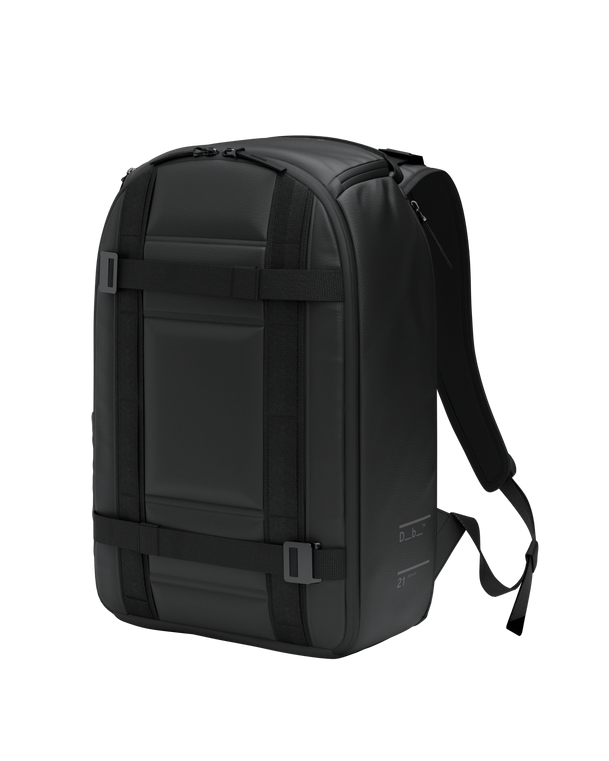
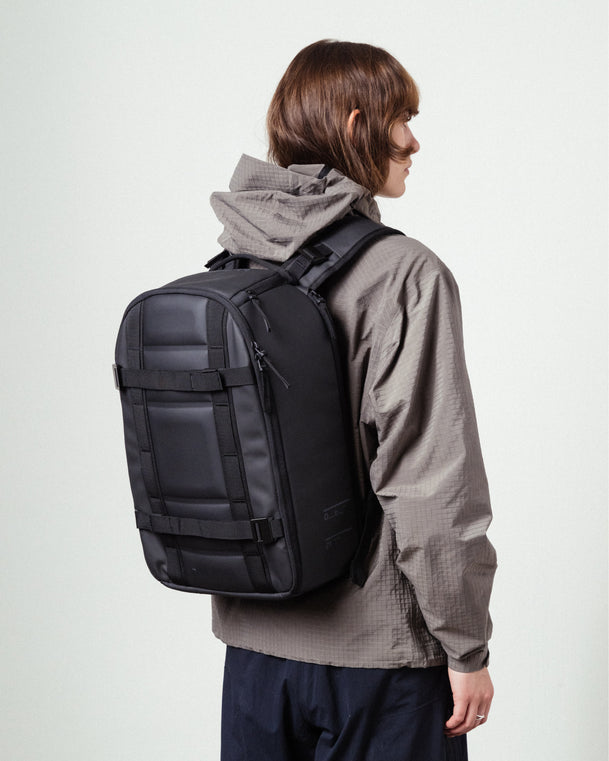
Your jacket pockets can hold a phone, lip balm and a snack. That's about it. For spare gloves, a second goggle lens or the fleece you took off at lunch you need a small ski backpack.
A 20 to 30 liter bag is enough for a day on the slopes. It holds an extra mid layer, spare gloves, water and lunch. Choose one that sits close to your back so it doesn't pull you around on the chairlift. You'll find the right size among our ski backpacks.
On his cat snowboarding trip in Canada, Jonathan Weaver kept a packing cube with spare goggles, gloves, neck gaiters and a fresh base layer. He brought four pairs of goggles and three pairs of gloves. That sounds like a lot. Wet gloves by lunch make it sound reasonable.

Get Dressed at the Lodge.
Driving to the mountain in ski boots is possible. It's also a great way to wreck your mood before the first chair.
I wear my base layer, mid layer and comfortable shoes in the car. The rest goes in one bag. Boots, helmet, goggles, gloves and socks. I change at the lodge and leave the bag in a locker or the car.
A boot bag makes this easy. The Hugger Bootpack 45L carries your boots and small gear on your back. The front panel unfolds into a changing mat so you're not standing in the snow in your socks.
Keep a dry pair of socks in the bag for the drive home. Future you will be grateful.
Flying to the Snow? Wear Your Bulkiest Layers.
Ski clothes take up a lot of space. My tip for flying is to wear your ski jacket and your heaviest boots or shoes on the plane. It frees up room in your bag. It looks a little odd at the gate but it works.
Pack your base layers and fleece tightly. Put your skis or snowboard in a ski bag with room for soft items around them. Our ski travel bags are built for that. Always check your airline's rules for sports equipment before you fly.
Our guide to how to travel with ski gear has more tips.

Your Ski Outfit Checklist.
Use this before every ski day.
Wear:
-
Base layer top and bottom
-
Mid layer
-
Ski jacket
-
Ski pants or bib
-
One pair of ski socks
Accessories:
-
Helmet
-
Goggles
-
Gloves or mittens
-
Neck gaiter
-
Sunscreen and lip balm
In your bag:
-
Spare gloves
-
Extra mid layer
-
Spare goggle lens
-
Water and snacks
-
Dry socks for later
Dress Well and Stay Out Longer.
The right ski outfit is not about the most expensive jacket. It's about staying dry, adjusting to the day and having what you need close by.
The best ski outfit is the one that keeps you out until the last chair.
Heading out after the lifts close? Our après-ski outfit guide covers what to wear next.
Frequently Asked Questions.
What Should I Wear Skiing for the First Time?
Wear a synthetic or merino base layer, a fleece mid layer and a waterproof ski jacket and pants. Add a helmet, goggles, gloves and one pair of ski socks. Rent the helmet and outerwear if you don't own them.
What Do You Wear Under Ski Pants?
Wear base layer bottoms and regular underwear under your ski pants. Choose merino or synthetic fabrics that move sweat away. On very cold days add a thin fleece pant.
Can You Wear Jeans Skiing?
No. Jeans soak up snow and water and get cold and stiff quickly. They also restrict your movement. Wear waterproof ski pants or a bib instead. You can rent them at most ski resorts.
Can You Wear a Regular Winter Coat Skiing?
You can for an easy day in dry weather. Most regular winter coats are not waterproof or breathable enough for skiing. They can soak through in wet snow or after a fall. A ski jacket with a helmet-friendly hood works much better.
Should You Wear One or Two Pairs of Socks Skiing?
Wear one pair. Two pairs make your boots tight and cut off circulation, so your feet get colder. Choose thin or medium ski socks in merino or synthetic that reach above the top of your boot.