


Our Guide to Alpine Skiing.

Most people ski alpine for fun using lifts at ski resorts, while athletes run against the clock at competitive alpine races. We’ll give you a rundown of what’s at stake during these championships, before turning our attention to us normal people and break down alpine skiing equipment, techniques, and the best ski resorts in Europe and the U.S. to do alpine skiing.
What is Alpine Skiing?
Alpine skiing, also known as downhill skiing, is a style of skiing performed on groomed slopes using skis with fixed-heel bindings. Most people ski alpine for recreation at resorts using lifts, while athletes compete against the clock in high-stakes races.
Alpine Skiing as a Competitive Race.
Alpine skiing is a major ski sport and includes several disciplines for championship skiing. During the Winter Olympics and other regional championships, skiers require immense stamina, strength, and agility to navigate marked trails.
Here’s how the events break down:
Different Disciplines of Alpine Skiing.
Downhill.
-
Characteristic: This is the fastest event in the lineup of alpine disciplines.
-
Focus: Speedy descents with minimal turns on long courses.
-
Important techniques: Muscle + courage. There are jumps and speeds can go up to 160 km/h. Therefore, athletes need a clear mind to judge the course correctly.
Slalom.
-
Characteristic: Slalom is the slowest discipline on the list, but that doesn’t mean it’s any easier. There are short runs with many quick turns through closely spaced gates, where technique plays a massive role.
-
Focus: Navigating many turns as fast and precisely as possible.
-
Important techniques: Frequent changes of direction requires control in every turn.
Giant Slalom.
-
Characteristic: Similar focus as in regular slalom, but the courses are longer and the gates are spaced wider apart.
-
Focus: Navigating many turns as fast and precisely as possible.
-
Important techniques: Cornering technique (standing well on the edges and making precise turns) is key!
Super-G.
-
Characteristic: A hybrid of downhill (speedy, steep descents) and giant slalom (quick turns).
-
Focus: Carving turns quickly and arriving at the finish line with as little time spent as possible.
-
Important techniques: Control through every turn making use of stamina, balance, and strength.
Alpine Combined.
-
Characteristic: A two-part test, combining a speed run (downhill/Super-G) with a technical run (slalom).
-
Focus: Steady technique while speeding down the trail in the first part, while the second part requires a good handle on turns as you take on a narrow trail and lots of gates.
-
Important techniques: All the aforementioned techniques of slalom, downhill and Super-G apply.

What Is Alpine Skiing Equipment?
Alpine skiing equipment is the gear you depend on for speeding down trails and executing turns safely. The most important equipment are the skis, naturally, and the bindings, boots, and poles. A helmet, goggles, and clothing are also necessary.
In competition, the alpine skiing equipment is of vital importance, as everything from poles to clothing impact the performance and the athlete’s technique.
List of Alpine Skiing Equipment
The list of alpine skiing equipment is quite comprehensive. Check it out below:
Essential Gear.
-
Skis
-
Poles
-
Bindings
-
Boots
-
Helmet
-
Goggles
Technical Gear.
-
Clothing: Weatherproof and insulating outer layers, and breathable inner layers.
-
Avalanche gear: Safety gear for going in the backcountry.
-
Climbing skins: Helpful grips for moving uphill in the backcountry.
-
Protective gear: Padding, gloves, and any extra equipment.

Skis.
The alpine skis are designed for downhill carving, meaning that they are sturdy and wide. They are all equipped with a metal edge for grip, but the length and shape of the skis depend on the discipline. The type of course, whether full of turns or speedy descents, requires different functionalities of the skis.
Men’s Skis.
-
Downhill: Minimum ski length is 218 cm, while the minimum radius is 50 m.
-
Slalom: Minimum ski length is 165 cm, while the minimum radius is not applicable.
-
Giant slalom: Minimum ski length is 193 cm, while the minimum radius is 30 m.
-
Super-G: Minimum ski length is 210 cm, while the minimum radius is 45 m.
Women’s Skis.
-
Downhill: Minimum ski length is 210 cm, while the minimum radius is 50 m.
-
Slalom: Minimum ski length is 155 cm, while the minimum radius is not applicable.
-
Giant slalom: Minimum ski length is 188 cm, while the minimum radius is 30 m.
-
Super-G: Minimum ski length is 205 cm, while the minimum radius is 40 m.
Poles.
As with the skis, there are different poles for each alpine discipline. In slalom, in particular, athletes use the poles to hit the race gates while turning, while generally, alpine ski poles are used for balance and steering. Poles that are being used in downhill, giant slalom, and Super-G are longer than slalom poles.
Pack in Ski Bags.
It can be a pain in the ass to travel with your snow gear. But it doesn’t have to be. Our Snow Roller is a long, compressible ski bag meant to streamline the packing and transport of skis and ski poles. It’s a spacious bag with compartments that also facilitate space for goggles and helmets. Additionally, its puncture-proof wheels pave the way for a smooth journey.
The Snow Essential Ski Bag is a more pared-down, but equally functional ski bag for travel. Its straps are easy to adjust and fit comfortably on your shoulders when you’re on the go. It is also available as a snowboard bag.
 Bindings.
The bindings secure the boots to the skis. As opposed to bindings used on telemark skis, alpine ski bindings are not flexible at all. Instead of having a free heel, the heel and the entire flat side of the foot is securely fastened to the ski. However, alpine bindings are designed to release their hold if you fall during skiing.
Boots.
The alpine boots are rigid and fit securely to the bindings and the skis. When alpine skiing, the foot is always flat and the boot is securely fastened to the skis. That being said, the boot does allow some wiggle room for the ankle, which is required to do the turns effectively.
The important thing to note about alpine ski boots is that they protect you from bumps on the race course and injuries from ski edges or sharp edges at the race gates. In other words, they are durable and secure in their fabrication and design.
Benefit From Boot Bags.
A solid boot bag should do more than just carry your gear – it should simplify the entire day. Our ski boot bags are shaped to fit your boots securely, provide space for essentials, and stay comfortable to carry through airports, parking lots, or resort villages.
Built for boots and all your snow-day gear, the Hugger Bootpack 45 L is durable, spacious, and ready for rough conditions. It features a 45 L main compartment, a full-zip front panel that doubles as a changing mat, and a water-resistant, wipeable interior for wet or muddy boots.

Travel Better. Db Snow Gear.
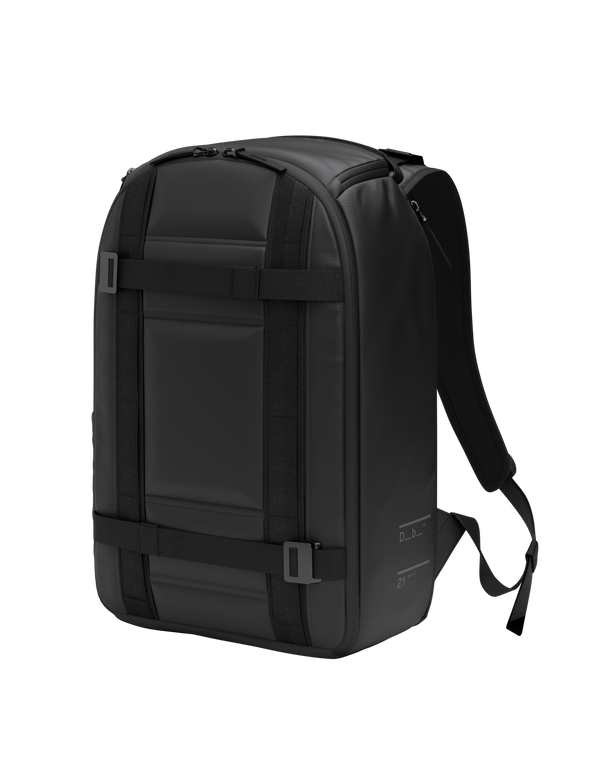
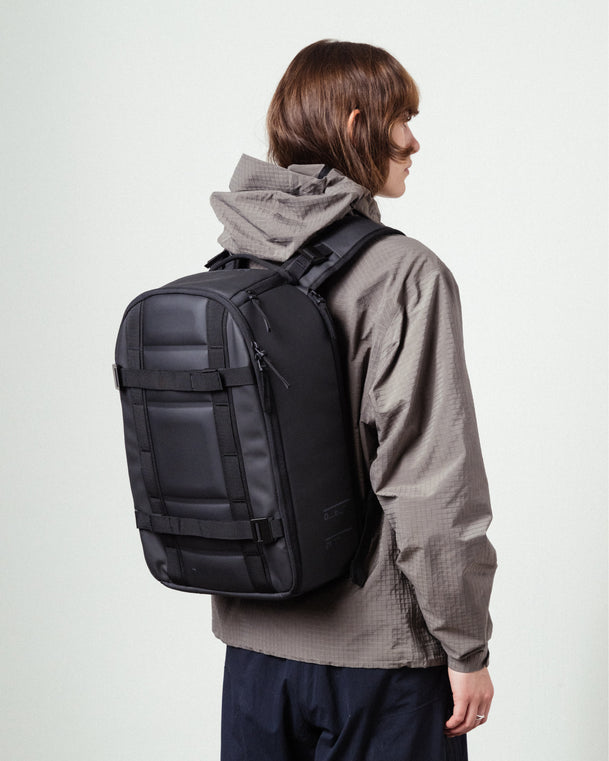
A backcountry adventure isn’t just about getting down the slopes – it’s about carrying the right gear, staying organized, and doing it comfortably. Whether you need a small snowboard backpack for day trips or a full-sized ski carrying backpack for backcountry adventures, we have a pack to match your style and needs.
The Hugger Backpack.
A versatile all-rounder for day trips and lift riding. Our Hugger Backpack features a roll-top design to expand or compress volume, multiple compartments for gear organization, and padded straps for comfortable carrying. Durable materials keep your equipment safe, whether you’re hitting the slopes or exploring town.
The Backcountry Backpack.
The Backcountry Backpack is the perfect ski and snowboard backpack for off-piste journeys and life off the mountain. The slim-fit design makes it lift-friendly and easy to handle on the slopes and the designated internal avalanche compartment secures the safety of your journeys.

Alpine Skiing vs. Backcountry Skiing.
Alpine skiing differs from backcountry skiing by the fact that alpine skiing is typically done on groomed trails, within a ski resort’s boundary. In contrast, freeriding, telemark and ski touring are different styles of skiing that can occur both within and outside a ski resort’s boundary.
Where to Ski?
Ready to head out, but not sure where to go? We’ve created many guides to the best European and American ski resorts for ski adventures. Take a deep dive into our guides for the best ski resorts below.
Alpine Skiing in Europe.
Alpine Skiing in the U.S.
Read One of Our Other Guides.
Interested in learning more about the basics of backcountry or telemark skiing, or want some expert insight into which techniques to fine-tune? Check out our guides and get inspired for the journey.
Your Questions Answered.
Alpine skiing.
What is the difference between alpine skiing and downhill skiing?
There is no difference between alpine skiing and downhill skiing. These are synonyms of the same thing: Skiing down patrolled and snow-covered slopes at ski resorts with fixed-heel boots and sturdy skis, typically relying on lifts to get to the top of the mountain.
What is alpine touring skiing?
Alpine touring skiing, also known as randonnée, is a style of backcountry skiing that combines uphill hiking and downhill skiing in remote, wild ski terrain away from ski resorts. Free-heel bindings and climbing skins are two key pieces of gear you need to climb uphill before you can descend down the backcountry slopes.
What is considered alpine skiing?
Alpine skiing is what most people know as skiing at lift-assisted ski resorts with groomed runs. These are marked and patrolled regularly. There is also competitive alpine skiing.
How hard is alpine skiing?
Alpine skiing requires strength, agility, fine motor skills, stamina, and mobility. Your level of strength or stamina will impact how hard you find alpine skiing, but for one, there are different levels at ski resorts, and secondly, you can learn techniques and improve your physical fitness a lot through practice.