

The Beginning of Carrying Gear on Your Back.
Long before backpacks existed people carried supplies using simple bags and baskets strapped across their shoulders or backs. Ancient hunters, traders, and soldiers often relied on these carrying systems to transport food, tools, and equipment when animals were not used.
The Knapsack.
For centuries, the most common military carrying solution was the knapsack, a simple canvas or leather sack worn over one or both shoulders. While it was effective for carrying essentials, they offered little to no support. With heavy loads pressing directly against the back, longer journeys often ended in discomfort and pain. Little by little, inventors began searching for a better solution.
Henry Clay Merriam's Military Innovation.
Many sources point to Henry Clay Merriam, a U.S. Army officer, as the inventor of the first backpack that resembles today's designs. In 1877, Merriam filed a patent for what became known as the Merriam Knapsack (Patent No. 204,066), a revolutionary carrying system later tested by the United States Army. His breakthrough was that he added a rigid metal frame to the back of the pack.
Unlike traditional knapsacks that collapsed against the body, Merriam’s design created a structured separation between the load and the soldier. He wanted to solve the age-old problem of gear crushing a soldier's back and ribcage. As knapsacks made of leather or other materials lacked any framing, this was a huge invention.
From Merriam’s Frame to Db’s Rib-Cage Construction™.
When Henry Clay Merriam patented his external frame in 1877, his goal was to protect the soldier's spine and ribcage from heavy, shifting loads. Today, we face a different challenge: protecting both our bodies and our gear.
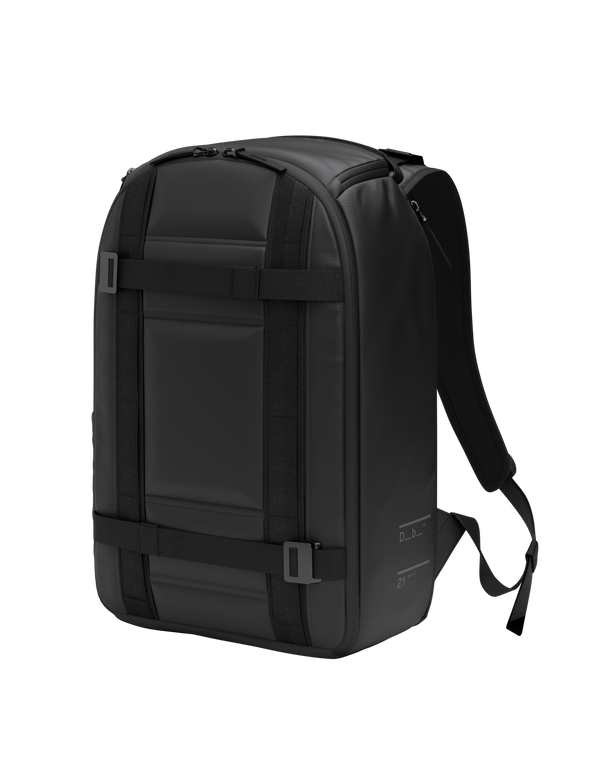
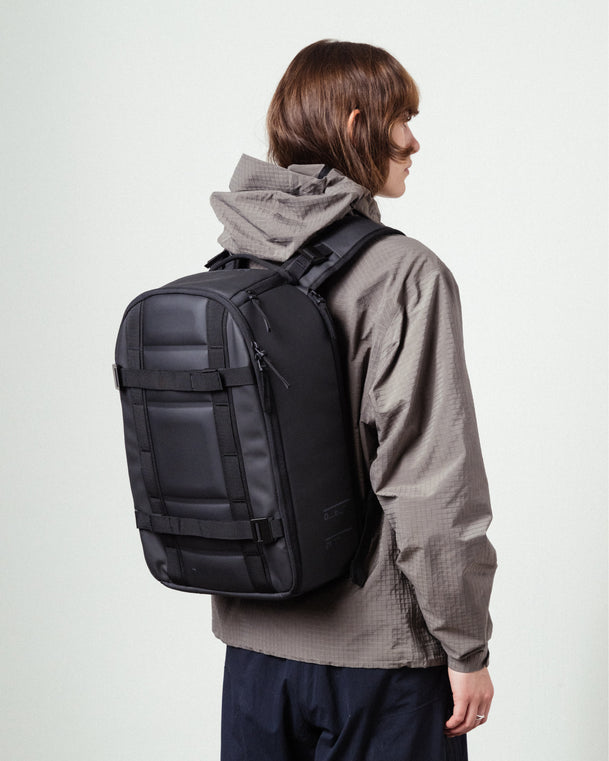
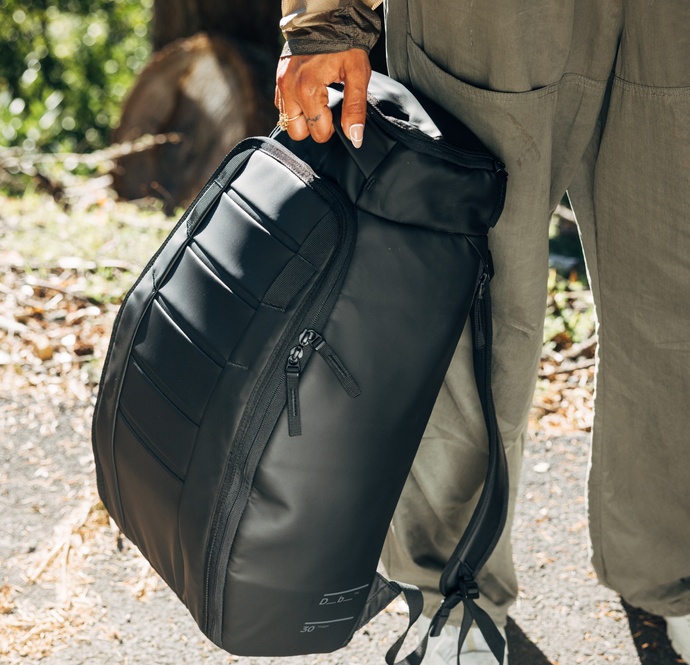
At Db, we took inspiration from these historical principles of structural support to develop our patented Rib-Cage Construction™. By integrating strong, lightweight ribs into our packs, we eliminated the need for heavy, bulky external frames. This design keeps the backpack lightweight and flexible while maintaining ultimate structural integrity and protecting your laptop, cameras, and travel essentials.
Explore: Is a backpack a carry-on?
What Did the First Backpack Look Like?
If we consider The Merriam Knapsack, the first backpack, it looked very different from the sleek backpacks we know today.
These are some of the features the first backpacks had:
- Made out of canvas or leather in the shape of a sack.
- A rigid metal frame in the back.
- Leather shoulder straps with buckles.
- Attachment points for military equipment.
- An elevated structure that kept gear away from the wearer's back, distributing weight directly to the hips via a rigid hip band.
The Evolution of the Modern Backpack.
Merriam's framed knapsack sparked a wave of innovation for the backpack. In the early 1900´s, more people began experimenting with external-frame designs that made it easier to carry heavier loads over long distances. One of the most influential breakthroughs came in 1909, when Norwegian inventor Ole F. Bergan introduced a lightweight steel-frame backpack that dramatically improved comfort and weight distribution.
As hiking, and travel grew in popularity, backpack design continued to evolve. By the mid-20th century, internal-frame packs emerged, offering better balance and freedom of movement. Combined with advancements in lightweight fabrics, padding, and ergonomics, these innovations transformed the backpack from a simple carrying sack into the versatile gear we rely on today.
The Modern Evolution of Carry.
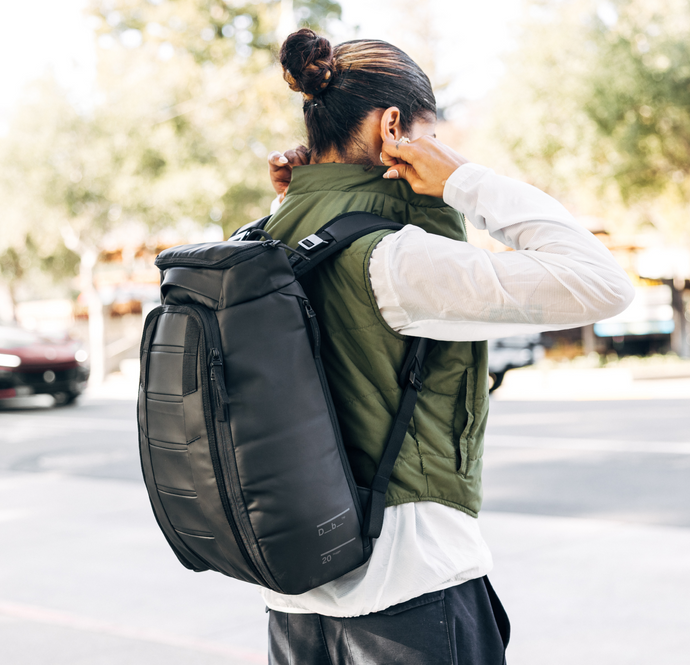
Today, the line between campus, commute, and global travel has completely dissolved, demanding a new standard of hands-free carry that transitions seamlessly from a morning lecture to an international flight.
While materials and technology have changed dramatically since the days of the Merriam Knapsack, the goal remains the same: carrying more comfortably and efficiently.
Why the Frame Changed Everything.
Frames allow weight to be distributed across the body instead of concentrating pressure on the shoulders. By transferring loads toward the hips and stabilizing the pack against movement, frames make it possible to carry heavier gear for longer periods with less fatigue.
Explore More.
Your Questions Answered.
What is the difference between a knapsack and a backpack?
The biggest difference between the two is that knapsacks rely almost entirely on the shoulders, while a backpack is engineered to transfer weight efficiently across the body, making it better suited for heavier loads, extended travel, and outdoor adventures. Modern backpacks often include:
- Internal or external frames.
- Padded shoulder straps.
- Adjustable systems.
- Hip belts.
- Ergonomic load distribution.
When was the first backpack made?
The first backpack-like design featuring a supportive frame was created in 1877 by Henry Clay Merriam. While people had carried knapsacks and sacks on their backs for centuries beforehand, Merriam's invention is widely considered the first significant step toward the modern backpack.
What is the oldest backpack ever discovered?
The oldest known ancestor of the backpack belongs to Ötzi the Iceman, a mummy discovered in the Alps in 1991 who lived around 3300 BCE. Alongside him was a primitive backpack consisting of a U-shaped hazel wood frame and two wooden boards lashed together with cord, proving that humans have relied on framed carrying systems for over 5,000 years.
What was the first backpack used for?
Backpacks have often been for military use. Their purpose was to help soldiers carry heavier loads more comfortably over long distances.