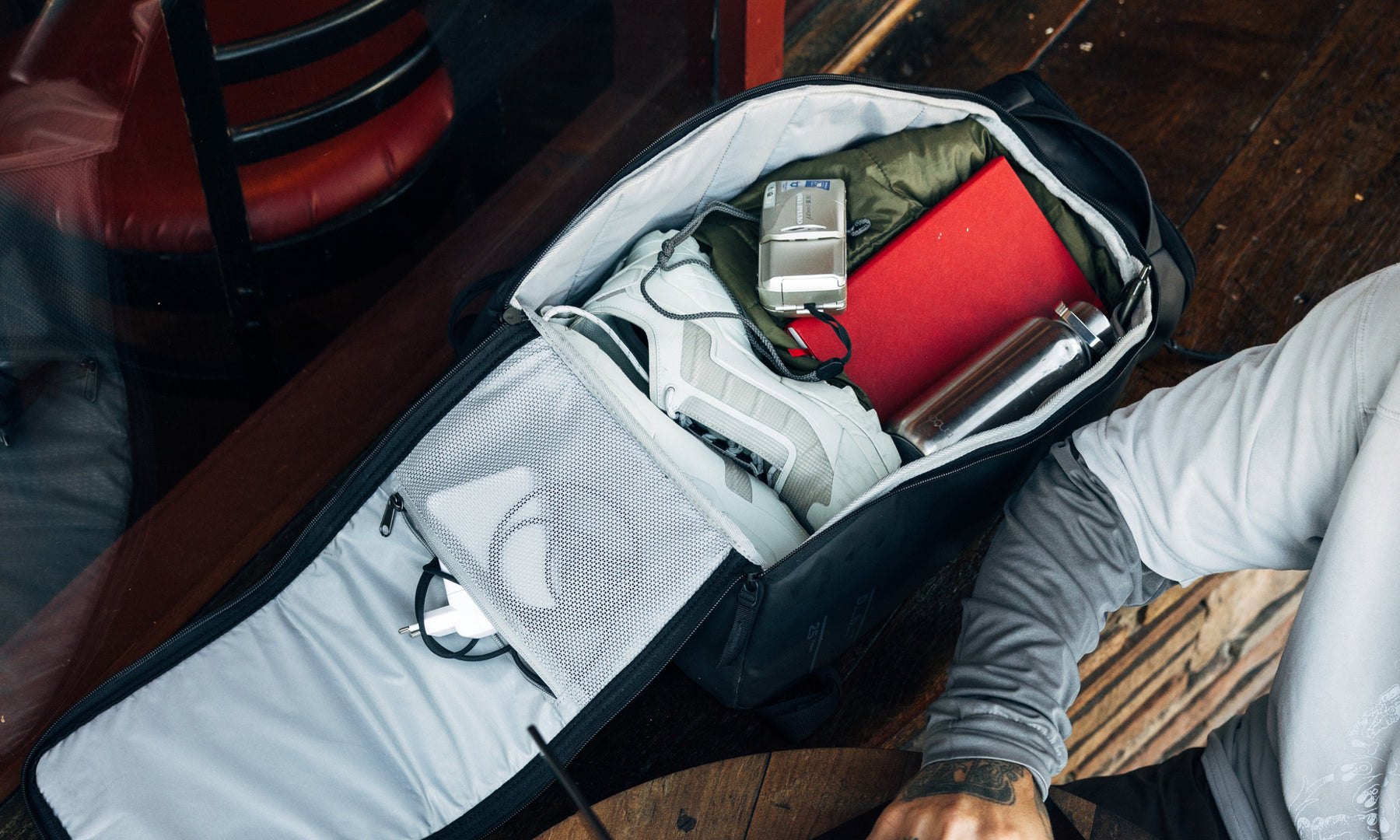
The Art of Packing Your Backpack.
Efficiency isn’t just about what you carry, but how you carry it. Packing is an underrated skill that transforms a heavy load into a much lighter experience. We’ve refined the process, from how to protect your electronics to optimizing every square inch of capacity. This is your guide to packing smarter for the road ahead whether you are traveling, hiking or going on other adventures.
How to Pack a Backpack for Travel.
Whether it’s a weekend in Manhattan or a month in Bali, every destination demands a unique kit – but the principles of packing remain universal. A well packed bag will feel much more lightweight than a poorly packed one. Here are some tips on where to place your essentials.
1. Place your lightweight gear at the bottom.
To create a base for your pack, place your lightweight bulky items at the bottom of your pack. Such as:
- Clothing
- Shoes
- Sleeping bags or liners
- Sleeping pads
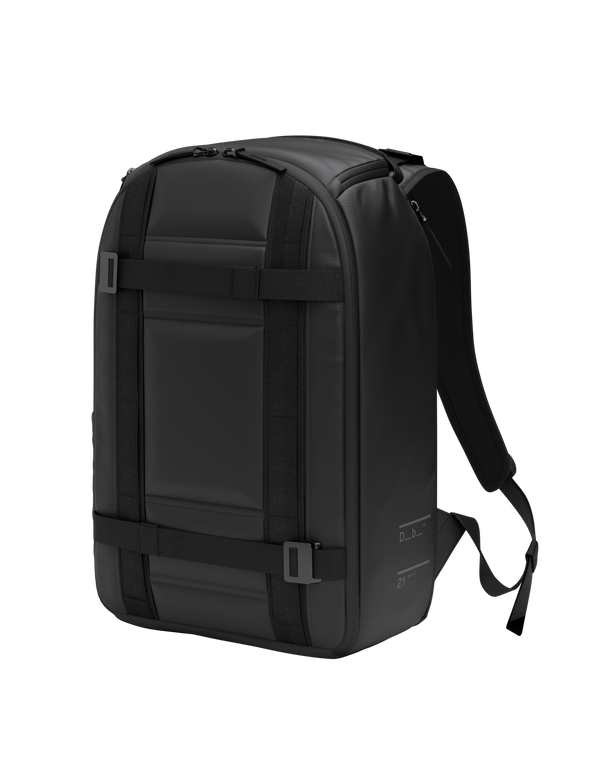
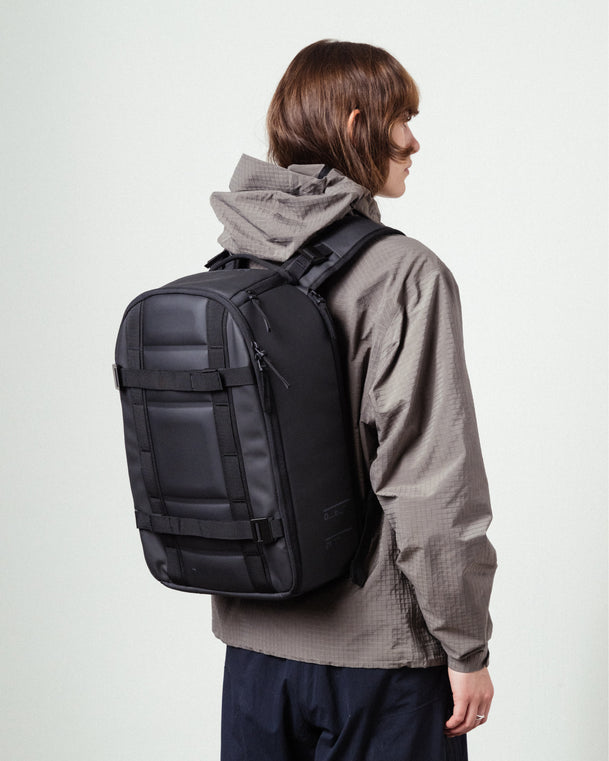
Tip! The extra volume of the Db Journey Hugger Backpack 30L allows you to place even bulkier items at the bottom without losing space for your essentials on top.
2. Keep heavier items close to your back.
For better stability and weight distribution, place heavier items close to the back of the backpack.
- Computer or other tech gear
- Books and journals
- Bulk of foods and drinks
Did you know? At Db Journey, we have innovated The Rib Cage Construction™, which is a reinforced core area specifically designed to hold heavy loads comfortably.
3. Place frequently used items on top and in dividers.
Strategic packing is about knowing your needs in advance. Keep your chargers, liquids, and extra layers in the top compartment or internal mesh dividers. The easy access keeps you moving smoothly through airport security and beyond.
- Selected pieces of clothing
- Chargers
- Toiletries
- Snacks or maps
For the smaller essentials: Many Db Journey backpacks, like the Hugger Backpack, feature top-access compartments for this purpose.
Gear Up. Move Confidently.
Smart packing keeps gear protected and your travel smooth. Db Journey backpacks offer supportive structure and practical compartments, helping you stay organized wherever you roam. Pack efficiently, choose dependable gear, and focus on the adventure ahead.
How to Pack a Backpack for Hiking.
Packing for the trail is about balance, comfort, and accessibility. Follow this guide to make your hike even smoother.
1. Place your sleeping gear at the bottom of your backpack.
- Sleeping bag
- Sleeping pad
- Nightwear
2. Place food and drinks along the back.
- Food supply
- Extra drinks
- Water filter
- Cooking gear
- Fill in gaps with clothes
3. Keep the rest accessible on top.
- Rain jacket or insulating layer
- First aid kit
- Toiletries
- Snacks
- Tent if the weather changes quickly
4. Exterior pockets and attachment points.
- Water bottle
- Sunscreen
- Bug spray / bear spray
- Flashlight
- Trekking poles or tent fly
More Important Tips When Hiking.
Focus on Accessibility.
Keep emergency items like rain gear, snacks, water, phone and first aid kits within reach. If you find yourself in a tricky situation, you can at least get your most important essentials out. Hiking in an area with bears? Bring you bear spray and keep it close by.
Compression and Weight Balance.
Pack tightly to prevent your gear from shifting, and balance the weight on both sides for stability.
Protect Fragile or Moisture-Sensitive Gear.
Make a cushion for your electronics or fragile items using softer materials like clothing between. Use dry bags or pack liners to seal out moisture, keeping your gear dry during your hike.
Adjust Fit After Packing.
Just as packing and weight distribution is important while hiking, the fit of your backpack is too. Tighten compression straps, adjust the hip belt, shoulder straps, and load lifters for stability. The Db Journey Backcountry Backpack 25L is an excellent choice for hiking. Its reinforced core supports heavier loads, while multiple compartments and exterior attachment points make organizing gear easier and keeping essentials accessible on the trail simple.
Explore: How to adjust your pack for the optimal fit.
How to Pack Clothes in a Backpack.
No matter where you are going, packing clothes efficiently saves you space and keeps your items accessible at all times.
Keep Your Pack Organized From Within.
For casual layers, the “rolling" method is the best way to compress fabric and save space while minimizing the friction that causes wrinkles. For more structured pieces like jackets, a fold is essential to maintain the garment's integrity. To bridge the gap between the two, integrate the Db Journey Essential Packing Cube. These cubes act as modular drawers within your pack, turning a chaotic main compartment into a categorized system, where you can compartmentalize each section and easily grab the cube you need.
Fill In the Gaps.
Place your bulky clothes, like heavy knitwear or boots, toward the center and base of the pack to keep your center of gravity stable. Use smaller essentials like socks or underwear to fill in any gaps, ensuring nothing shifts during transit.
Separate the Dirty Laundry.
This step is important, and requires you to think many steps ahead while packing. Keep a dedicated space for dirty laundry to ensure your clean clothes stay fresh, and place wet shoes in waterproof bags, or let them hang on the outside of the backpack to dry up.
Five Steps on How to Pack a Suit in a Backpack.
Going away and needing to pack your suit? Here’s a good method to minimize wrinkles on the go.
- Turn one shoulder inside out, then tuck the other shoulder into it.
- Fold the jacket gently to fit your backpack.
- Fold pants along the creases and wrap around the jacket.
- Place the suit in a garment or plastic bag, padding with soft clothes.
- Keep it near the top of your pack and hang/steam it upon arrival.
A Ramverk Pro Backpack is excellent for suits, thanks to its structured compartment that maintains the jacket’s shape while accommodating other travel essentials.
How to Pack Shoes in a Backpack.
Shoes can take up space in a backpack, so it is essential to place them strategically. Here is how to pack shoes in a backpack:
- Clean the soles of your shoes before packing and place them in shoe bags or plastic bags.
- Fill your shoes with socks or small items to keep the shape.
- Place shoes along the sides or bottom of the pack for weight stability, and to save space.
- Keep heavier shoes closer to your back in the middle section of your backpack. This is where the weight is distributed the best.
- Separate dirty or wet shoes using waterproof bags, place them in exterior pockets or let them air dry hanging on the outside of the pack.
Protect Your Gear from the Rain.
Keeping your gear dry is essential – especially for electronics, sleeping bags, or a change of clothes.
Pack Liner.
Lightweight internal bag that protects against heavy rain and partial submersion. Choose a liner larger than your pack so you can roll down the top for a waterproof seal. For example, a 90L liner works well for a 70L pack.
Pack Cover.
Lightweight external cover that shields your pack from rain. Many hikers use both a pack liner and cover for extra protection.
Backpacks Made for Every Climate.
Db Journey backpacks aren’t fully waterproof, but they’re water-resistant and ready for most adventures. The materials have a protective polyurethane coating to keep your gear safe in everyday rain. Heavy downpours might let a little water in through seams or zippers, but with a bit of extra protection, you’ll be ready for anything.
Explore More Packing Tips.
- Going on a ski trip? Check out: How to pack your ski gear.
- Guide: How to pack a snowboard bag for air travel
- Choose the right size: Guide: Backpack sizes
Your Questions Answered.
How to pack ironed clothes in a backpack?
To make sure your already ironed clothes stay crisp, use plastic liners in between the folds, and gently fold your pieces flat. Place them on top of heavier items and secure them in packing cubes so they don't move inside the backpack. Don't place anything on top of the ironed pieces. When arriving at your destination, hang your clothes up and you are ready to go.
How to pack clothes in a backpack without wrinkles?
To reduce wrinkles in your clothes upon arrival, fold your garments flat and secure them with packing cubes. By filling each cube to capacity, you create internal tension that prevents fabric from moving during transit.